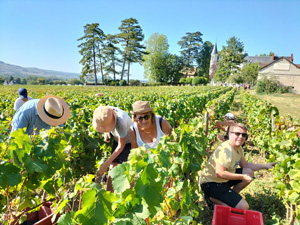
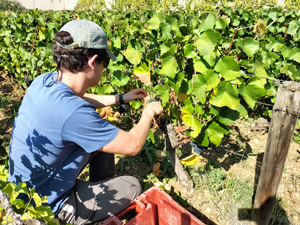
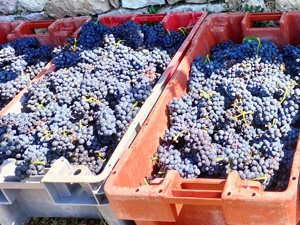
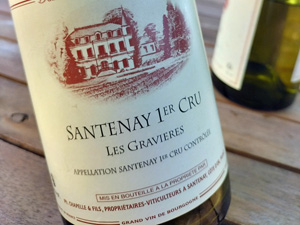
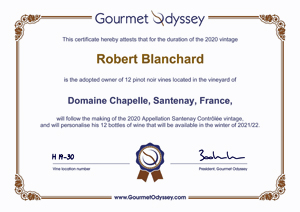
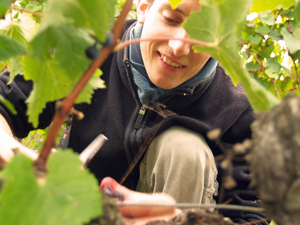
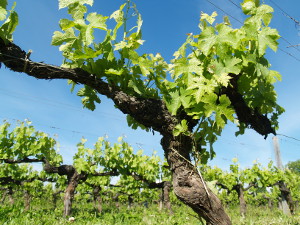
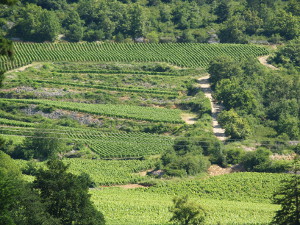
Adopt a Vine and Make Your Own Wine

with the Gourmet Odyssey Wine Experience

Visit www.gourmetodyssey.com for more information

Burgundy

The Best Organic Wines Selected at the Millésime Bio 2012 Organic Wine Fair


Millésime Bio is the world's largest organic wine fair, and is becoming more and more important as the years go by.  Each January, organic winemakers from around the world gather in Montpellier to showcase their wines and to share best practices in organic and biodynamic farming techniques.

Each of our five partner vineyards were exhibitors at the wine fair, and put their wines forward for the Challenge Millésime Bio best organic wine awards.

 
Organic wine Awards. Silver medal Challenge Bio 2012.
   
Organic wine awards Challenge Bio 2012

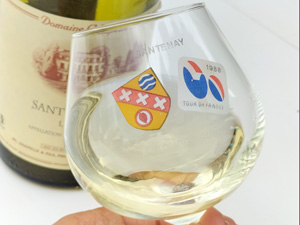
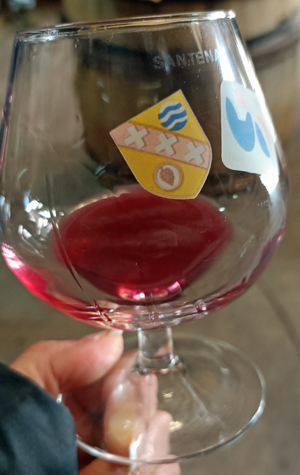
We are thrilled to announce that two of our partner winegrowers had one of their organic wines selected for a silver medal.  Domaine Chapelle won theirs for the Santenay Premier Cru, Beaurepaire 2009 organic red wine, and Domaine Jean-Marc Brocard for their Chablis Vielles Vignes 2009 organic white wine.

Congratulations for this well deserved praise, that once again recognizes the quality and excellence of our partner winemakers!


Add a comment

Harvest in Chablis


Another weekend, another region and a new Harvest Experience Day!  This time we were at Domaine Jean-Marc Brocard in Chablis with some of our Gourmet Odyssey Wine Experience clients to harvest the Chardonnay grapes!

Harvest Experience in Chablis, Burgundy, France at Domaine Jean-Marc Brocard

As soon as the clients had all safely arrived, we headed straight into the vineyard to receive our orders from Frédéric Guegen, the Vineyard Director.  He split us into two teams of harvesters and porters.

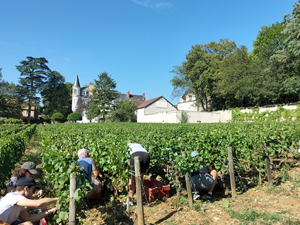
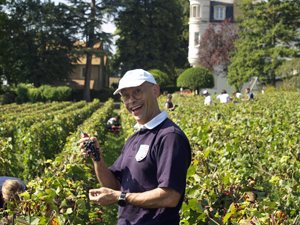
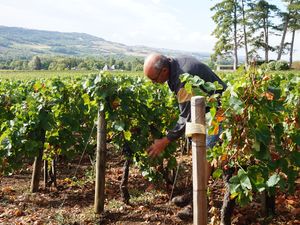
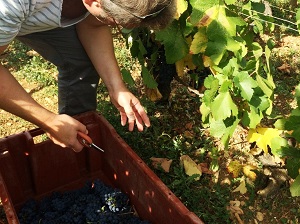
Armed with a pair of secateurs and a bucket, the harvesters paired up to pick the grapes from both sides of the vine rows.  Paying particular attention to their fingers, the harvest began!

Harvest the bunches of Chardonnay grapes in the vineyard at Domaine Jean-Marc Brocard

The grapes at the winery hold much promise this year.  They have a good balance between sugar and acidity, and have grown in abundance!  At the end of the harvest, the yield should be about 25% more than last year.  The buckets were therefore filling up quickly, and it didn't take long for the first cries of "Porter" to resonate!

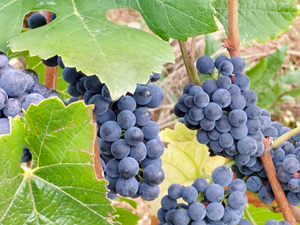
Chardonnay grapes ready for picking

Each member of the porter team found themselves with a big basket strapped to their back, their mission being to carry the bunches of grapes to the trailer located at the edge of the vineyard.  As soon as the bucket is full, the harvesters call for to the porters to come, and then empty the fruit into the porter's basket.  It's a physical job, especially as a full basket can weigh up to 60kg.  You often think that the basket is full long before it actually is! With the rolling landscape of Chablis, you also have the slopes to deal with!

Emptying the harvested grapes into the porter's basket

Emptying the baskets is not as easy as it looks either, especially the first time.  You have to climb a ladder and then let the grapes fall over your head.  Some porters almost followed the grapes in!

Emptying the harvested grapes into the trailer without falling in

Working together, it's impressive how quickly the vines are stripped of their fruit.  It gave us more than enough to work with afterwards though!

Grape Harvester in full action

Back at the winery, the moment for the wine tasting came.  First up, a Petit Chablis 2010, followed by a Chablis "Domaine Sainte Claire" 2009 which we then compared to a Chablis "Vielles Vignes de Sainte Claire" 2009.  We continued the tasting with the wine from the adopted vines of Gourmet Odyssey clients,   "La Boissonneuse" 2009, before savouring a few of the Chablis Premier Crus; a "Vau de Vey" 2009, a "Montée de Tonnerre" 2009 and a "Vaulorent" 2008.

Tasting the Chablis wines

Overlooking the vines, we tucked into the Harvesters Meal!  The tasting continued with a few of the estate's Irancy red wines and a few of the older Chablis vintages, served in magnums, such as the Chablis "Vielles Vignes de Sainte Claire" 2001.

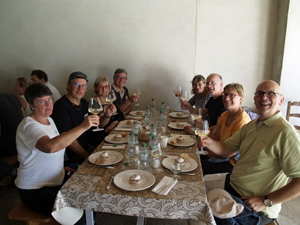
Savouring local Chablis delicacies during the harvesters lunch

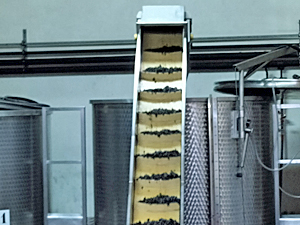
Each day was a little different.  On Saturday, the winery was in full action because the team of professional harvesters was also working.  This meant that the mechanic presses were up and running.  We rejoined our grapes that we had lovingly harvested at the fermentation hall, to see them emptied from the trailer into the press below.  The press then buzzed into life as it extracted and separated the juice from the skin, pips and stalks.

Pressing the chardonnay grapes for white wine
 

Continuing the journey of our harvest, we ended up in front of the tank where the fermentation will begin.  Glass in hand, we tasted the fruit of our labour, an oh so sweet grape juice!  We then had the chance to compare it to the juice from another vat, where the alcoholic fermentation had already begun for several days.

Tasting the freshly pressed grape juice and bourru direct from the fermentation tank

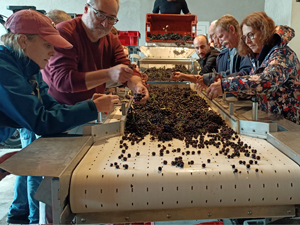
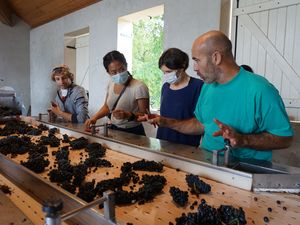
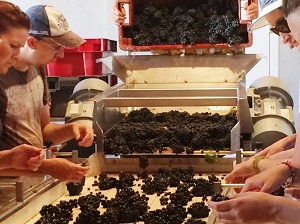
The estate's harvesters had been working in a pinot noir plot of vines, located in the nearby Côte d"Auxerre.  How the grapes are treated and put into the fermentation tanks differs from the chardonnay, so we were able to contrast the methods used for red and white wines.  Our first observation was the use of a sorting table.  We each took up position either side of the table to sort the good from blemished or unripe grapes.   Then we watched as the grapes are stripped from their stalks and then put into the tanks without any pressing.

Sorting the Pinot Noir graoes on the sorting table

Sunday being a day of rest for the harvesters, the electric presses weren't operating.  That gave us the opportunity to discover how the grapes were pressed in days gone by!  The estate still has a few old wooden pressing machines, and one of the longer-serving members of staff, Jean-Bernard, helped us get one of the legendary presses up and running!

Traditional wooden wine press in action

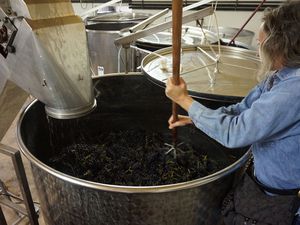
Once filled, we put in place the wooden planks and the gearing that would press the grapes.  To work the press, we had to move a long iron handle to and fro.  Easy at first, but it became more and more resistant as time wore on! You have to be patient because if you go too quickly, the juice doesn't have time to flow out.

Working the wine press

Even if it takes much longer, the grape juice, tasted directly from the press, was still as sweet and delicious as the day before!

Tasting the grape juice direct from the press

Many thanks to Céline, Frédéric and the team at Domaine Jean-Marc Brocard for having welcomed us so warmly.  We're longing to taste the finished 2011 vintage!

Add a comment

Harvest 2011 at Domaine Chapelle in Burgundy


At last, the long awaited moment has arrived to start the harvest!  The villages and vineyards are a hive of activity.  Teams of harvesters are dotted amongst the vines from the crack of dawn, and the roads are filled with the tractors that go back and forth between the vineyards and the wineries, carrying their precious load.

We started the Harvest Experience Days for the 2011 vintage last weekend at Domaine Chapelle in the Côte de Beaune village of Santenay.

Harvest Experience Day at Domaine Chapelle in Burgundy France

As with the other French wine growing regions, the grapes have ripened early this year.  At Domaine Chapelle the first bunches were harvested some three weeks earlier than last year!

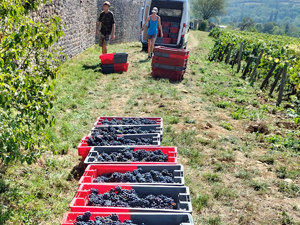
After the quick introductions, it was straight of the Clos des Cornières vineyard, home to the adopted vines of the Gourmet Odyssey Wine Experience clients.  Jean François Chapelle lost no time in distributing our tools for the day, a pair of secateurs each, and a pile of crates to put the grapes into!

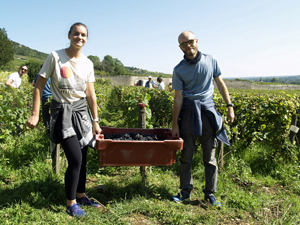
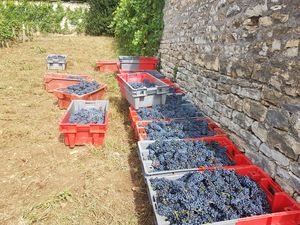
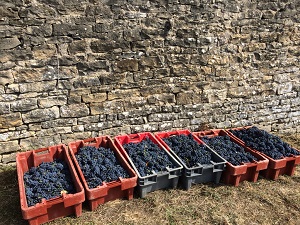
Containers at the start of each vine row to collect the harvested grapes

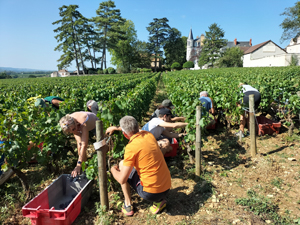
In teams of two, we spread out to take charge of a row of vines per couple, and the harvest began!  After removing some of the leaves from around the bunches, so as to better see the grapes, we used the secateurs to cut them and then we placed them in the crate.

Harvesting the Grapes from the adopt-a-vines

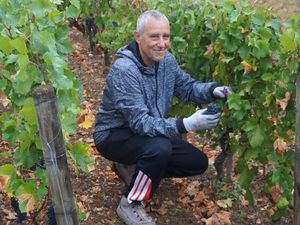
In such a setting it's impossible to resist the temptation of tasting the grapes!  They are looking good this year, fairly large and oh so sweet!  We noticed a few damaged bunches, either some grapes that had shriveled up from the hot sun at the end of June, and some bunches where the first signs of rot have appeared, caused by the hot and wet weather that settled over Burgundy in the couple of weeks prior to the harvest starting.

Assessing the quality of the grapes

Once we had filled each crate, we brought it back to the beginning of the vine row to be picked up later, and then took a new crate to harvest some more grapes.

Filling the crates with the harvested grapes

Harvesting is a fairly physical job, especially in Burgundy where the vines are pruned close to the ground.  The aperitif was therefore very welcome!

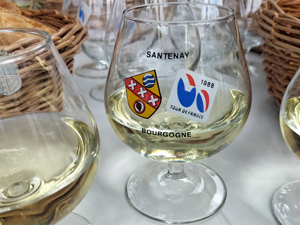
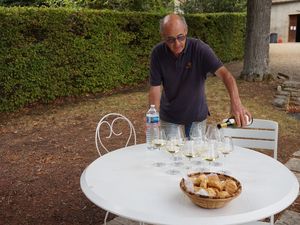
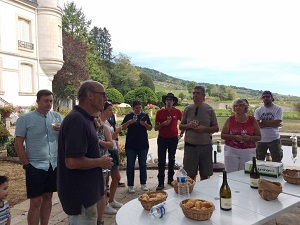
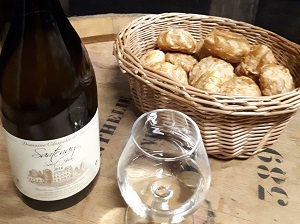
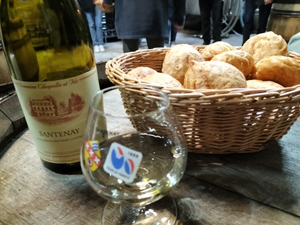
Back at the winery, we started the wine tasting session with a Santenay "St Jean" 2009 white wine, followed by a Chassagne Montrachet Premier Cru "Morgeot" 2009.  As is the custom, the wines were accompanied by some gougères, a local specialty!

Wine tasting Burgundy wines from Domaine Chapelle

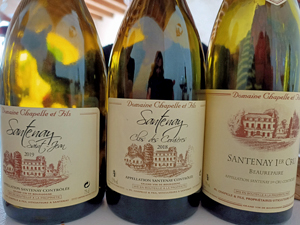
During the meal, we continued the tasting with some of the winery's red wines; a Santenay "Clos des Cornières" 2007, followed by an Aloxe Corton 2007 to compare two pinot noir wines of the same vintage but from different terroirs.  We ended with a Santenay Premier Cru "Beaurepaire" 2002.

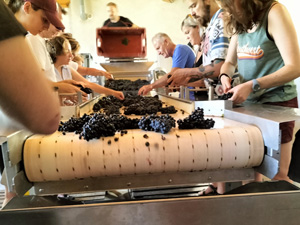
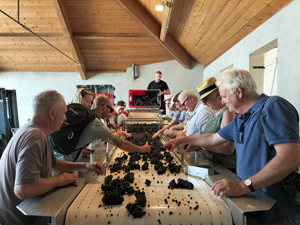
After lunch, we met back up with our harvested grapes, which had since continued their journey to the reception hall.  Here the crates, brimming with grapes, are received and emptied onto the sorting table.  Side by side with the professional team, and once again equipped with a pair of secateurs, we separated the damaged or unripe grapes from the ones which are to be used to make our wine.

Sorting the good from bad grapes on the sorting table

We saw the de-stemming machine at work which separates the grape berries from the stalks.  The stalks and rejected grapes are collected in a trailer to make compost.

The discarded stems headed for compost

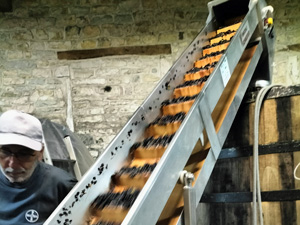
The sorting table is located above the fermentation hall, and so the good grapes continue their journey down a slide where they are collected in a trolley before being taken to one of the fermentation tanks.  Each plot of vines is vinified separately.  Yannick Jacrot, the Technical Director, and Jean François Chapelle then explained the first stages of fermentation to us.

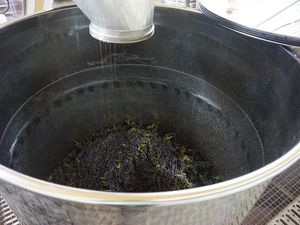
Filling the fermation tanks with the harvested grapes

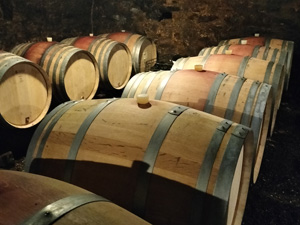
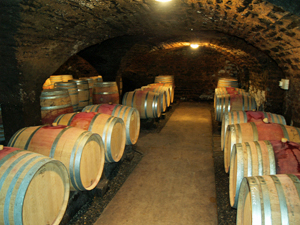
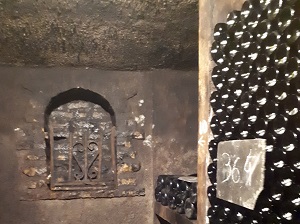
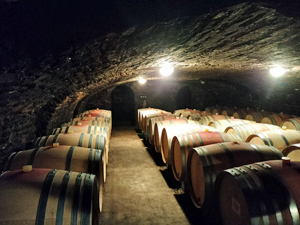
We then headed down the stone steps into the cellar to see where the wines will continue their fermentation and ageing in oak barrels.

Visiting the wine cellar

All this made us thirsty again, so we had a final refreshment waiting for us; some grape juice from that day's harvest!

A big thank you to all those who shared the day with us, and especially to Jean François and his team for welcoming us so warmly during the busiest period of the winemaker's year!

Add a comment

Home Straight to the Harvest


We had to be flexible last Saturday with the Wine Discovery Experience Day at Domaine Chapelle to avoid a few showers, but that didn't stop us having a good time all the same!

Understanding the vineyards and terroir of Burgundy

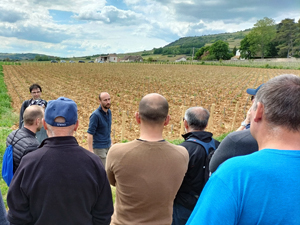
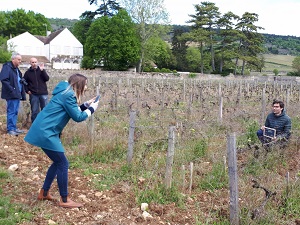
We started off with a little stroll through the vines.  Jean-François Chapelle explained what makes the Burgundy terroir so special, and showed us the geological differences between the vineyards that make up Santenay village, Santenay Premier Cru and the plots used for the Burgundy Pinot Noir.

We climbed up to one of Domaine Chapelle's Premier Cru vineyards, Beaurepaire.  Some of the old vines in this vineyard have recently been dug up, so Jean-François explained how his team removed the vines and roots, and how the plot will be sowed with mustard to regenerate the soil before the new vines are planted.

Visit of the Fermentation Hall

The first rain shower arrived a little earlier than expected, so we scurried back to the shelter of the winery to continue our discussions on the work carried out in the vineyard, and we also visited the fermentation hall where the grapes are received at harvest time and put into the fermentation tanks.

Wine Tasting of Burgundy Wines at the winery

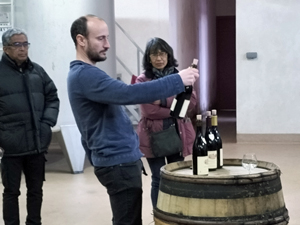
Next up was a wine tasting of some of the white Burgundy wines from Domaine Chapelle, a Santenay "Saint Jean" 2009 and a Chassgane Montrachet Premier Cru "Les Morgeots" 2009.  The wine tasting continued over our lunch of Burgundy specialties.  First, a Santenay "Clos des Cornières" 2006, the wine chosen for the Gourmet Odyssey Wine Experience, then an Aloxe Corton 2007, with a Santenay Premier Cru "Beaurepaire" 2002 to finish.

Rent a vine in a Burgundy vineyard

After the meal, we had a new bright patch, so we headed back amongst the vines, this time to the Clos des Cornières vineyard so that everyone could get acquainted with their adopted vines!

Visit of the wine cellar

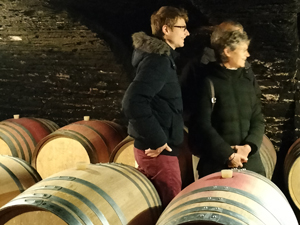
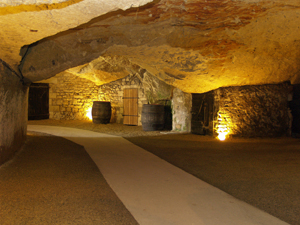
Back at the winery, we descended through the low door to the vaulted cellar which is a real labyrinth.  Here we saw where the ageing takes place in the oak barrels, and where hundreds of thousands of bottles of wine are stored!

The Wine Labeling Room

The Wine Experience Day finished with a visit to the labeling room, where one day next year the bottles of the 2011 vintage will be dressed with the personalised wine labels of the clients of the Gourmet Odyssey Wine Experience.  But there's still lots of work to be done before then - you have to be patient in the world of wine!

Add a comment

Among friends in the Chablis Vineyards


We've just spent two glorious sunny days among the Chablis vines with some of the clients of the Gourmet Odyssey Wine Experience.  With Céline, Pierre and Yvonnick from Domaine Jean-Marc Brocard at our sides, we spent the day behind the scenes to get an insight into what it's like to be a winemaker!

Explaining the terroir around Chablis

Link to the video 

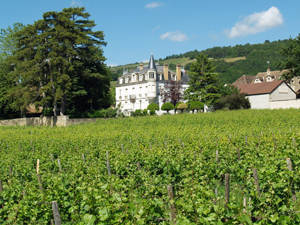
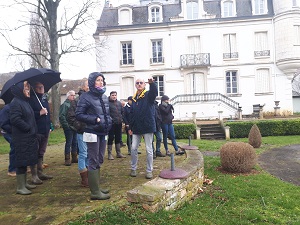
To get a better understanding of the terroir around us, we stepped out onto the terrace which overlooks the vines which encircle the winery.  It's an impressive view and the perfect spot to appreciate the difference in vineyard plots that make Petit Chablis, Chablis, Chablis Premier Cru and Chablis Grand Cru wines.

Epamprage

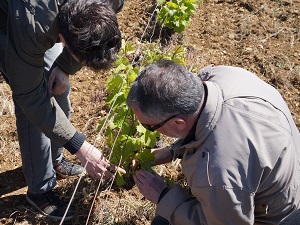
In the vineyard, Yvonnick explained to us all of the key stages in cultivating the vines, from pruning right up until the harvest.  As is the custom with our Gourmet Odyssey Wine Experience Days, the winemakers had left us some work to do!  To concentrate the energy of the vines in the fruit bearing branches and the grapes, we needed to do some "épamprage", which involves removing unwanted shoots from the vines.  These are the shoots that won't bear any fruit this year, and won't be needed when it comes to pruning to generate next year's harvest.  The other advantage of épamprage is to improve the flow of air around the grapes to help defend the vines from mildew.

Getting stuck in

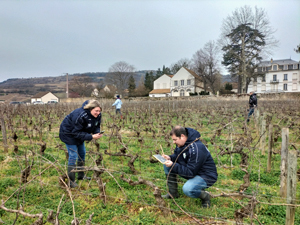
After receiving our instructions from Yvonnick, we spread out among the rows of vines to get stuck in.  But we soon found out that épamprage is not quite as easy as it seems!

Adopt-a-vine

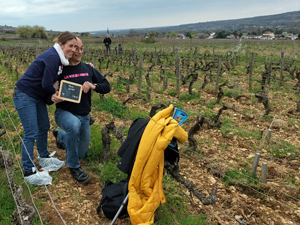
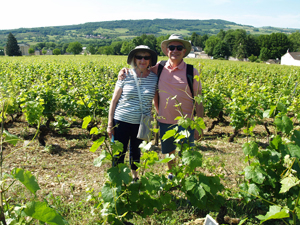
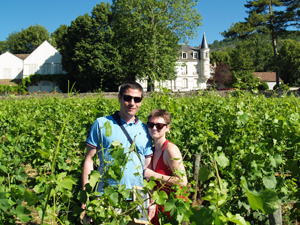
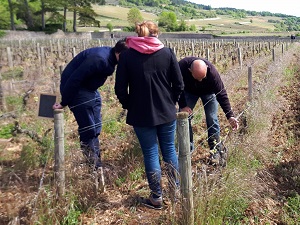
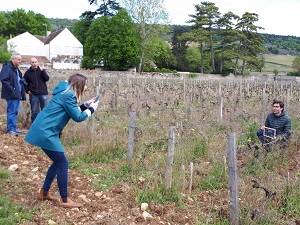
Each Wine Experience client is the adopted owner of some vines in the vineyard.  Their vines are identifiable by a name board placed in front of them.  Once the hunt for the vines was declared open, we set off to find them and to check that everything was in order!

Organic and biodynamic wine making

The Boissonneuse vineyard, where the adopted vines are located, was the first plot to be converted to organic and biodynamic cultivation.  Yvonnick explained the difference between these two approaches, and showed us some of the plants, found at the end of the vine rows, that are used in making the biodynamic infusions and concoctions that attract unwanted insects away from the vines, or are used to strengthen the vines.

Wine Tasting of the Chablis Wines at the Vineyard

After all our efforts and all the talk about wine, the time finally came to taste some of the wines from Domaine Jean-Marc Brocard.  To get a good appreciation of the range of wines, we started the wine tasting with a Petit Chablis Sainte Claire 2010, followed by a Chablis Sainte Claire 2010, before tasting the Boissonneuse 2009, the wine chosen by Gourmet Odyssey.  We then moved on to several Chablis Premier Crus and finished with a Chablis Grand Cru Les Preuses 2009.

Exposed cut of the Kimmeridgien soil

Once we had enjoyed a lunch from the highly acclaimed Chablis charcutier, Marc Colin, we headed down into the cool or the cellar.  Here, the Brocard family has left one of the walls exposed so that we can see the layers of limestone and marl which are the source of the distinctive aromas and taste of Chablis wines.

Visit of the fermentation hall

The day finished with a visit to the fermentation hall to see the tanks and oak vats that are used to ferment and age the wines.  After a final tasting, straight from the vats, we said our goodbyes, everyone hopefully leaving with a better understanding of the fascinating profession of a winemaker!

Link to the video 

Add a comment

Spend a few days in Chablis!


If you plan to explore Burgundy for a weekend or several days and visit some of the region's renowned vineyards, then you'll need a base from which to explore!  Why not book yourself into a luxury gite?

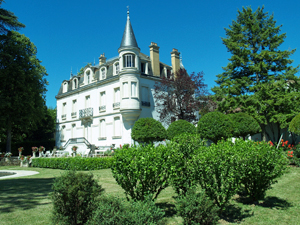
Gite at Domaine Jean-Marc Brocard, Chablis, Burgundy

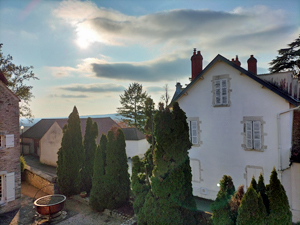
La Revue du Vin De France, one of the leading French wine magazines, has just launched a special wine tourism issue.  One of the featured gites is "Le Refuge de Petit Louis", owned and run by Dmaine Jean-Marc Brocard.  This welcoming and spacious gite is available to all travellers and Gourmet Odyssey Wine Experience customers.

The perfect home from home to explore Chablis and the precious wines of Domaine Brocard!

For more information about the gite, follow this link.

Add a comment

Relevage of the Vines


Among the green and leafy vines of Burgundy, we spent last Saturday in Santenay at Domaine Chapelle for a Gourmet Odyssey Wine Discovery Experience Day.

Burgundy Terroir

From the Clos des Cornières vineyard, where the adopted vines of the Gourmet Odyssey Wine Experience are located, Jean-François Chapelle and Yannick Jacrot explained the differences in the surrounding terroir, why some vineyards are designated as Premier Cru, and others Santenay Village.

We learnt about all the steps involved in cultivating the vines from pruning through to the harvest, and as the domaine is organically certified, Yannick explained the particularities that are involved in treating organic vines.

Relevage

As always with a Gourmet Odyssey Experience Day, there is some work to do!  At this time of year, the vines are growing rapidly, and as the vine is a creeper plant, they need to be managed and held in check.   Yannick and Jean François showed us how to carry out "Relevage" and "Rognage".

Relevage is ensuring that each of the vine branches grow between the training wires, and that they are separated from one plant to another.  This helps to support the vines, and to increase the flow of air around the grapes to defend against mildew.  As the vines had grown since the last relevage, the training wires were raised up a notch on the wooden posts and then clipped together using a biodegradable clip.

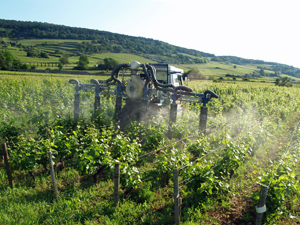
Rogange is trimming the tops of the vines to direct more of the plants energy into the fruit-bearing branches.  This is predominantly carried out using the tractor, but is still done manually for some of the more fragile young vines, using a pair of shears.

Working on the vines

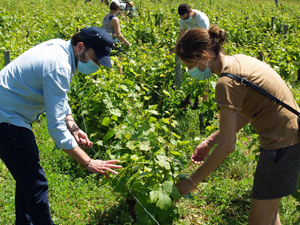
Explanations well understood, we then dispersed amongst the rows of vines to get to work on raising the training wires, separating and placing the branches, and trimming the tops of the vines!

Adopt-a-vine

Before heading back to the winery, there was time for each client to introduce themselves to their adopted vines!  The grapes have already started to form, and give the first mouth-watering taste of the 2011 vintage to come!

Wine Tasting Burgundy wines

After all the talk about how the vines and grapes are nurtured, it was time to taste the final product!  We gathered next to the old oak fermentation tanks in the cuverie to begin the wine tasting session of Domaine Chapelle's wines.  We started with a Santenay "St Jean" 2009 white wine, produced on the upper slopes behind the domaine that we had seen in the morning from the vineyard.  We then moved onto a more complex Chassagne Montrachet "Morgeot" 2009.

Lunch of Burgundy specialities

The wine tasting continued over lunch with the red wines, including a Santenay, Santenay Clos des Cornières, Aloxe Corton and Santenay 1er Cru.

Cuverie

In the afternoon, we headed over to the fermentation hall to see where the grapes are collected at harvest time and put into the vats, and to learn how the sugar is turned into alcohol during fermentation.
Wine cellar

The final part of the day was to visit the cellar that lies like a labyrinth below the winery buildings and courtyard.  This is where the wines are aged in a mixture of new and old oak barrels, and once bottled, are stored.

As always, thanks to Jean François and Yannick for making the day so interesting and informative!


Add a comment

The Wine Pros Gather.


The Vinexpo Wine Fair is undeniably the largest international wine fair for professionals and a must-attend event for all growers.


Vinexpo 2011

For the 2011 edition from June 19th to 23rd , the show brings to Bordeaux over 2000 exhibitors from more than 40 countries around the world!

Three Gourmet Odyssey partners including Domaine Jean-Marc Brocard are present to promote their wines and their rich terroir, and by a happy coincidence, in the organic wine hall, Domaine Chapelle and Chateau Beau Rivage are located on adjacent stands!

Add a comment

Biodynamic Wine Making in Chablis


We entered into the depths of the mysterious world of biodynamic wine making during the latest Gourmet Odyssey Wine Discovery Experience day at Domaine Jean-Marc Brocard in Chablis, Burgundy.  
Bidoynamic winemaking using cow horns stuffed with cow dung

The Wine Experience days are a hands-on and practical way for our adopt-a-vine clients to learn more about wine making and the life of a winemaker in the main French wine growing regions.

Watch the video

Chablis vineyards and terroir

To introduce us to the Chablis wine growing region, we stepped out onto the terrace at Domaine Jean-Marc Brocard to survey the surrounding vineyards.  From this great vantage point Céline Brocard-Guegen, pointed out and explained the differences in terroir between the four local appellations, Petit Chablis, Chablis, Chablis Premier Cru and Chablis Grand Cru, and briefly explained the history of the winery that her father started some 40 years ago with a small plot of vines that were loaned to him.

Walking in the Cbalis Vineyards

We then walked to the Boissonneuse vineyard, home to the Gourmet Odyssey adopt-a-vine plot.  This vineyard was the first of the winery's vines to be converted to organic and biodynamic cultivation.  We were accompanied by Yvonnick, head of biodynamics at Domaine Jean-Marc Brocard, who talked us through the various of stages of working on the vines from pruning to harvesting.   

Explaining De-budding


As always during a Gourmet Odyssey Wine Experience Day, there is some work involved, and the task was to de-bud the vines (ébourgeonnage).  Yvonnick explained the importance of de-budding to improve the quality of the grapes by concentrating the growth and energy of the vines into the future fruit-bearing canes.  He showed us how to select the stems to detach, and which ones were to be left alone.

De-budding - Ebourgeonnage


Each client then set off to find their adopted vines, and began putting into practice what Yvonnick had just explained.  Luckily Céline and Yyvonnick were at hand to guide us, as it's not always as simple as you would think! 

We learnt about how the vines are treated organically, and were also introduced to the world of biodynamics.  The Experience Day was planned to coincide with one of the key biodynamic events that is undertaken at Domaine Jean-Marc Brocard, the digging up of cow horns, filled with cow dung, that have been buried for six months!  First impressions of biodynamic farming are often that it is all a bit of hocus-pocus and wizardry, so you need to keep an open mind and bear in mind the underlying principles of biodynamics, that is to improve the structure of the soil, and to strengthen the natural defenses of the plant from disease.

Unearthing the buried cow horns


The cow horns had been interred in the fertile grounds of the old priory in Chablis that also belongs to the Brocard family. During the six months the cow manure ferments to form a fibrous super concentrated compost, that when mixed with collected rainwater and spread amongst the vines, helps to improve the soil structure and enhance the life of micro-organisms.

Emptying the cow horns


Our job was to remove the fermented cow dung from the horns.  Not as smelly and dirty a task as you might think!  In fact the cow dung has a sweet and rich aroma!

Wine tasting Petit Chablis, Chablis, Chablis Premier Cru and Chablis Grand Cru


Intrigued, amazed, disbelieving, no one was left indifferent as we returned to the winery to finally taste some of the wines from Domaine Jean-Marc Brocard, including the Petit Chablis Sainte Claire 2009, Chablis La Boissonneuse 2009, Chablis Premier Cru Vau de Vey 2009, Chablis Premier Cru Vaulorent 2008, Chablis Grand Cru Valmur 2008 and ending with the Chablis Grand Cru Les Preuses 2009.

Lunch


During the meal of local Chablis charcuterie and cheese, we continued the wine tasting with a Chablis Premier Cru Montmains 2002 and the domaine's Irancy 2008 red wine.

Wine Tasting from the fermentation vats


The afternoon finished with a tour of the fermentation hall to see the mix of oak and stainless steel vats that are used to ferment and age the wines.  A final tasting was in store of the unfinished 2010 wines, direct from the vats!
Many thanks to Yvonnick and Céline for giving us an insight into the life at the winery, and for introducing us to the weird and wonderful world of biodynamic winemaking!

Watch the video

Add a comment

De-budding in Burgundy


Under the blue skies of Burgundy, we spent last weekend at Domaine Chapelle with some of the Wine Discovery Experience Day clients.  The aim of the day is to learn more about making wine in a very practical way and to get behind the scenes to find out what it's really like to be a winemaker.

Watch the video (french langauge)


Burgundy vineyards

After the initial introductions, we headed straight out into the Clos des Cornières vineyard, where the adopted vines of the clients are located.  With the panoramic views of the surrounding vineyards, Jean Françcois Chapelle began by explaining the difference in terroir between the vine plots used for Premier Cru, Santenay village, Burgundy red, and Santenay village white wines.  Something which is much easier to understand with the landscape in front of you than by looking at a map!

Cultivating the vines organically
 

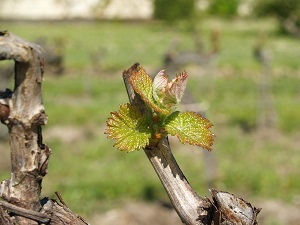
We learnt about all of the key stages in cultivating the vines from pruning, treating the vines organically, right through to when the grapes will eventually be fully ripened come harvest time.  Much like the other wine producing regions of France, Burgundy has had a very warm and sunny April, which means that the vines are currently some 3 weeks in advance of a normal year.  It's still too early to predict exactly when the harvest will be, but it will almost surely be sooner than usual.

The difference betwwen Chardonnay and Pinot Noir Vine Leaves
 

The adjacent vineyard is planted with Chardonnay vines, so we took a look at the difference in the vines, the different pruning methods used and compared the foliage of the pinot noir and Chardonnay vines. 

De-budding


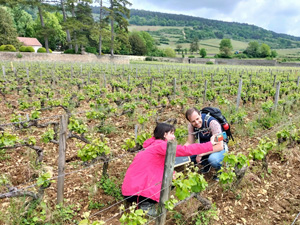
Back in the Clos des Cornières vineyard, time to get down to some work!  The essence of a Gorumet Odyssey Wine Experience Day is to learn about wine making by touching, seeing, doing, tasting and smelling.  Jean François had left a few rows of vines to be de-budded.  He explained the importance of removing some of the vine shoots to concentrate growth in the future fruit-bearing shoots, which will help improve the quality of the grapes, and showed us how to select which shoots to break off.  Easy! We each settled in front of some vines, looked at each shoot, remembered what Jean François had told us, and then froze as the realisation of the responsibility that had been placed upon us hit home. No-one wants to choose the wrong shoot to detach!  Luckily Jean François and Yvette Chapelle were at hand to guide us, and soon the pace of activity increased!

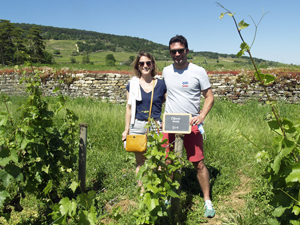
Rent-a-vine sign in the Burgundy vineyard


Signs had been placed in the vineyard to mark where the adopted vines of each client are located. Time was set aside to search out each client's mini plot of vines.  The cameras came out, various poses were adopted, some set about weeding around their vines, and others even started murmuring sweet nothings to encourage their fertility!

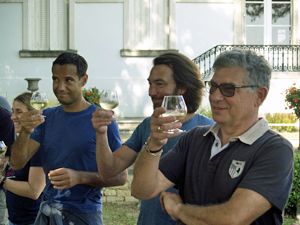
Wine tasting in the courtyard Domaine Chapelle, Santenay, Burgundy
 

After the effort, time to head back to the winery for a well earned aperitif!  In the shade of the courtyard, we began the wine tasting, accompanied by some Gougères, a delicious cheese pastry specialty from Burgundy.  We started with Domaine Chapelle's Santenay "St Jean" 2009 white wine, a crisp and mineral chardonnay from the upper slopes above the domaine that we had seen from our time in the vineyard.  Next we tasted the Chassagne Montrachet  "Morgeot" Premier Cru 2008 white wine, a more fruity and complex wine.

Lunch, including boeuf bourguignon and local cheeses, was served in the reception hall, whilst the wine tasting continued with the red wines. First a comparison of the Santenay Village "Clos des Cornières" 2009 and 2006 (the wine selected for the Gourmet Odyssey Wine Experience), followed by the domaine's Aloxe Corton 2007, and finally the Santenay "Beaurepaire" Premier Cru 2002. 

Visit of the fermentation hall

The cool of the cuverie and cellars awaited us in the afternoon.  First an introduction to how the grapes are received at harvest time, sorted, and ferment in the tanks.

Visit of the cellars
 

Ducking our heads, we descended into the vast cellars where the 2010 wines are currently ageing, and some 130,000 bottles are stocked.  Jean François explained the ageing process, and the choice of oak barrels used.

The wine labelling station
 

The visit ended with an explanation of the bottling and labeling stations, the final stage in preparing the wine before it is packaged up and dispatched to be enjoyed far and beyond the small village of Santenay!

A very warm thanks to Jean François and Yvette for sharing their passion with us, and for giving us an insight into the many and varied facets that make up the life of a winemaker.

Watch the video (french langauge)


Add a comment

Wine Tasting of the 2010 Vintage during the Vinification Experience Day at Domaine Chapelle


Last weekend saw us travel to Santenay in Burgundy for the Vinification Experience Days at Domaine Chapelle.  During each day, we participated in an in-depth wine tasting course, alongside the winemakers, to discover the key stages of fermentation and ageing of the wine, and to better understand the notion of terroir.

Oenology course in Burgundy at Domaine Chapelle

The Vinification Experience Day is the most technical oenology course of the wine experience days offered by Gourmet Odyssey, and most of the time is dedicated to wine tasting.  We therefore headed straight to the cuverie (fermentation hall), and after a brief explanation of how the grapes are received and put into the tanks at harvest time, we learnt more about the fermentation process.

Tasting sugar, salt, acid, and bitter solutions


To prepare us for the wine tasting to follow, Yannick, the Technical Director at the wine estate, had prepared a little test: four numbered cups, each containing a sugary, acidic, salty or bitter solution.  The game was to guess which was which.  Not the most appetising drinks, but as Jean-François Chapelle, the owner of the winery, told us, wine tasting is a work tool!  He also explained the importance of the five senses when tasting wines; smell, sight, taste, touch and hearing.

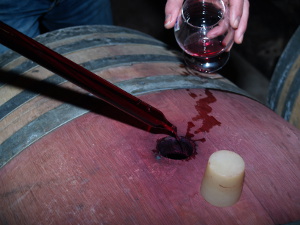
Wine tasting direct from the barrels


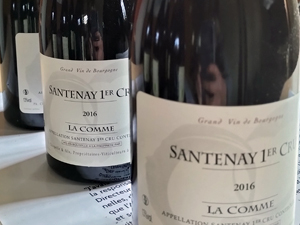
In the cellar, we began the tasting of the 2010 vintages, using a pipette to draw the wine directly from the barrels.  The côte de Beaune region of Burgundy uses just one grape varietal in the makeup of its wines, pinot noir for the reds and chardonnay for the whites.  The wines we tasted were chosen to highlight the difference in terroirs and the impact that the choice of oak used in the barrels has on the wines.   The first comparison was between wine from the same vines, from the same vineyard plot, and of the same age, but aged in different barrels.  The second comparison showed us the difference in terroir, comparing two Premier Crus, Santenay "La Comme" and Santenay "Beaurepaire", which hail from two different vineyards with differing geology and relief.

Blending wines from different aged vines


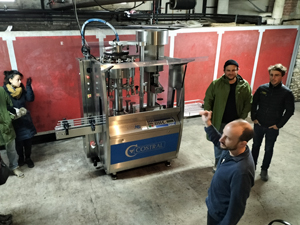
Climbing back up from the cellar, we stopped at the bottling machine before arriving at the final test.  This time we were presented with three wines, each coming from different plots in the same vineyard, the Clos des Cornières, where the adopted vines of the Gourmet Odyssey clients are located.  As well as their situation, the vines also varied in age, so we could also compare the impact on the wine.  One of the wines was more advanced in the ageing process than the others, one more fruity, and the last had a longer finish.  Using measuring cylinders, we played with different proportions of these three wines to make our own blends.  We tasted some great blends, but unfortunately the doses were not always remembered!

We passed the labeling machine as we headed back to the reception hall for the aperitif of Santenay white wine and gougères, a local specialty.  During the meal we tasted other regional fare such as beouf boruguignonne, and Epoisses cheese, and continued the comparisons of the estate?s wines with a Clos de Cornières 2009 and 2006, an Aloxe Corton 2007, and a Chassgane Montrachet Premier Cru 2007, before ending with an old marc de Bourgogne with the coffee.

Introduction to the adopted vines


After all that, we needed to take in some fresh air! Off we headed into the vineyard to inspect the work, and to give each person the chance to (re)introduce themselves to their adopted vines!
Thank you to all for two enriching and enlightening Vinification Experience Days.

Link to video (video available in french language only) 

Add a comment

Amongst the Chablis vines for a Wine Discovery Experience Day


Last Saturday we were at Domaine Jean-Marc Brocard in the heart of the Chablis vineyards for a Gourmet Odyssey Wine Discovery Experience Day.  The objective for the day, to learn more about cultivating the vines, and biodynamic winemaking.

In the Middle of the Chablis vineyards for the Wine Dicovery Experience Day

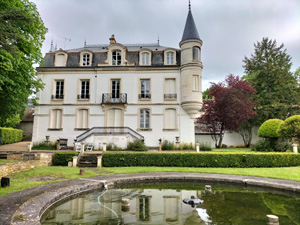
Céline Brocard, the daughter of Jean-Marc, welcomed us to the winery in the magnificent reception room that overlooks the estate's vineyards which surround the building.  Céline introduced us to the region and winery, and from the balcony explained the difference in the terroir of the Petit Chablis, Chablis, Chablis Premier Cru and Chablis Grand Cru.

Explanation of Petit Chablis, Chablis, Chablis Premier Cru and Chablis Grand Cru vineyards


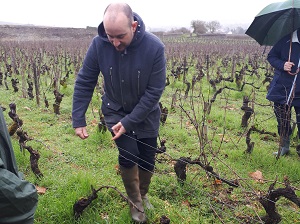
We were fortunate to have a crisp blue skied day.  After equipping ourselves with boots and warm coats, we headed off directly for the Boissonneuse vineyard, where the adopted vines of the Gourmet Odyssey Wine Experience clients are located.  We were accompanied by Yvonnick, a modern day "druid" who is in charge of the biodynamic culture at the estate, and passionate about working in harmony with the environment and nature's rhythm.  Under his expert guidance, we learnt why and how to prune the vines, and realised that pruning vines is not as simple as it seems!
Learning how to prune the vines


Yvonnick then explained the fascinating principles of biodynamic farming, explaining the difference between organic and biodynamic, and how the biodynamic treatments are prepared using plant infusions, cow manure and silica, and how they are applied to treat the vines. 

Explanation of biodynamic wine making


After a few hours spent outdoors, the relative warmth of the cellar was very welcome!  At one end of the cellar, the wall has been left in its natural state to expose a cross section of the earth that characterises the Chablis terroir; Kimmeridgian strata composed of alternating limestone and clay marl.  The cellar was the location for our wine tasting session of the estate's organic Chablis wines, including a Chablis "vielles vignes", the Chablis from the Boissonneuse vineyard, several Chablis Premier Crus and a Chablis Grand Cru "Les Preuses".  The gougères, a Burgundy specialty, helped keep the hunger at bay before tucking into the Chablis Ham, served at lunch overlooking the vines!

Wine tasting session in the celllar


In the afternoon, we headed down to the wine making building to get an introduction into the vinification side of things, and finished with a final wine tasting, direct from the oak casks, of a few of the 2010 wines that are still ageing.

Wine tasting direct from the oak casks
Another great day that once again helped better understand the care and effort that is needed to make a quality wine!

Add a comment

The Millésime Bio Organic Wine Fair Returns to Montpellier


The New Year has come, let the wine fairs begin! From the 24th to the 26th of January, the Millésime Bio Wine Fair will take place in Montpellier.

Millésime Bio 2011 Winefair

This fair's aim is to present organically certified wines from around the world to the visitors and professional wine buyers.

Two of Gourmet Odyssey's partners, Domaine Jean-Marc Brocard and Domaine Chapelle, are exhibiting at this organic wine fair, and will be happy to welcome you should you be attending.

More Info

Add a comment

Burgundy Wines Showcased in London!


On 20th January, London welcomes a hundred Burgundy winemakers at the Terroirs & Signatures de Bourgogne 2011 wine fair.

Meet our partners at the Terroirs and Signatures 2011 wine fair in London

Domaine Chapelle and Domaine Jean-Marc Brocard, the two Burgundy partners of Gourmet Odyssey located in this beautiful region, will be presenting a wide range of their best wines.

It's the occasion to meet the winemakers and discover the richness of Burgundy wines during a huge wine tasting session that lasts the whole day! And for those who want to improve their knowledge of wines, a training seminar with a commented tasting of Village appellations will be presented from 10 to 12 am.

A mouth watering and enriching day awaits!
More Info

Add a comment

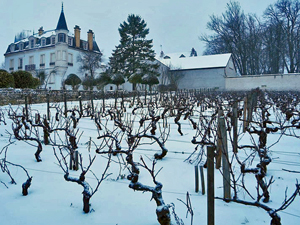
The Snow covers the Chablis Vines!

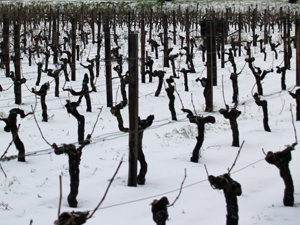
Winter is not yet officially upon us, but the Chablis valleys have already been whitened... 

Domaine Jean-Marc Brocard Vineyard Chablis under the snow
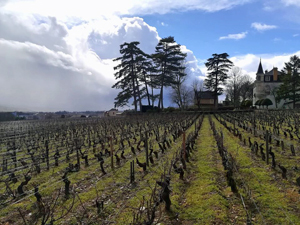
The snow flakes that have fallen during the past few days have been enough to cover the burgundy vineyards with a white cloak. This picture is taken from the "Boissonneuse" vineyard, looking back across the vines towards Domaine Jean-Marc Brocard.

Add a comment

Domaine Jean-Marc Brocard Reviewed by Le Figaro Magazine


Chablis - La Boissonneuse 2008

Chablis la Boissonneuse Wine Label
A true test for Julien Brocard.  Convince his father, Jean-Marc, one of the great Chablis winemakers, that a biodynamic wine, made using the traditions of yesteryear, can achieve excellence.  The bet has paid off : a white wine that is mineral, generous, perfumed and very much alive.

Add a comment

Harvest Experience at Domaine Chapelle in Burgundy


Last weekend, we had the pleasure of welcoming the Harvest Experience Day 2010 clients at Domaine Chapelle, with a few drops of rain, but in good cheer! Everyone was looking forward to harvesting their grapes, now finally ripe for making the 2010 vintage.
Grapes ready for harvest

A few morning rain showers meant that we changed the order of the day a little.  After the introduction to the region and the wine estate by Jean François Chapelle, we headed off to the reception hall where the grapes, freshly harvested by the team of 40 harvesters, are received to be inspected by the expert eyes of the sorting table team.

Harvested grapes arrive in the reception hall

Yannick, the Vine Manager and, during harvest time, manager of the sorting team, explained and showed us how to separate the good grapes from the bad, thus ensuring that only the best continue their journey into the fermentation tanks.  Around the sorting table, the atmosphere is very jovial, and the jokes fly around.

Sorting the good from bad grapes

Once sorted, the good grapes enter the destemming machine to separate the grapes from their stems.  The stems are then collected together with the rejected grapes, part of which will be turned into compost to nourish the vines for the next harvest, and the rest used to make the strong liqueur, Marc de Bourgogne.

Collecting the stems for compost

Domaine Chapelle boasts a new reception hall which was completed just in time for last year's harvest.  It was engineered to make the handling of the grapes as gentle as possible to help further improve the quality of the wine. And so instead of the grapes being pumped, as is the case in many wineries, they slide by the force of gravity into the awaiting trolley below.

The trolley is then wheeled by hand to one of the vats where each vineyard plot is fermented individually.  The grapes and their juice enter the vats to ferment, which can last between 10 and 25 days depending on the year.

The grapes enter the fermentation tanks

By this stage, the rain had now stopped, and so arrived the moment that everyone was waiting for!  Down to the vineyard, booted up and armed with secateurs to harvest the grapes.  Each client introduced themselves to their adopted vines, identifiable by a sign with their name on, and after a quick lesson by Jean François on which grapes to pick, it was time to knuckle down to work!  And we can testify that the harvest was a good one!

Gourmet Odyssey harvesters hard at work

After the effort, the just rewards! Back to the winery for the wine tasting, accompanied with gougères, a local Burgundy specialty.  We started with Domaine Chapelle's Meursault 2008, followed by the 2003 and 2005 vintages of their Santenay "Clos des Cornières", the wine chosen for the Gourmet Odyssey Wine Experience.  Jean François explained the difference between the two vintages, which is very pronounced due to the heat wave of 2003.  We then finished with the Gevrey Chambertin 2007 and the Santenay Premier Cru "Beaurepaire" 2002. 

Wine Tasting

Next, off to the make-shift harvesters' refectory, to savour one of Yvette Chapelle's legendary harvesters' meals.  Yannick had spoken of them in hallowed terms during the last Wine Discovery Experience Day, and we weren't let down! Parsley ham, followed by beef, stewed in an Aloxe Corton (one of the estate's wines) sauce, regional cheeses, and a delicious apple tart, all accompanied with a Santenay Premier Cru "La Comme" 2002.  Difficult to get moving again after such a feast!

The Harvesters meal

We finished the day with a guided cellar tour.  Yannick explained the important ageing and blending side of winemaking, and the impact that the choice of wine barrels has on the wine.

Wine Cellar Tour

To sum up: A very pleasant day, full of encounters, sharing and conviviality.  We hope that everyone left with a small insight into the life of a winemaker during the busy harvest season, and that the next drop of Domaine Chapelle's wine will be that much more appreciated!

Add a comment

The Saint Vincent Tournante 2011 in Corgoloin


The annual wine festival, the Saint Vincent Tournante, will be hosted by the Burgundy village of Corgoloin on the 29th and 30th January, 2011.  Corgoloin is one of the villages that make up the Côte de Nuits appellation.

Poster for Saint Vincent Tournante 2011 Corgoloin Burgundy

The Saint Vincent Tournante dates back to the middle ages to pay homage to the patron saint of winemakers, Saint Vincent of Saragossa.  The festivities had almost disappeared until the founders of the "Confrérie des Chevaliers du Tastevin", wine brotherhood, relaunched the tradition in Burgundy in 1934.  By the end of the 1990?s, the festival was so successful that it attracted over 100 000 people over the weekend, making the event unmanageable logistically and financially. 

Today, the festival has been reduced in size, but there were still some 40,000 visitors last year for the Saint Vincent Tournante 2010 in Chassagne Montrachet.
During the festival, a procession is led through the selected village on foot, with each of the 80 wine brotherhoods "confréries" being represented by people in costume and their statues of Saint Vincent.  The procession is followed by a religious mass and a traditional meal of pig for the families of the members of the brotherhoods.

The other big event of the weekend is the wine tasting of the wines selected for the Saint Vincent Tournante.

If you are planning on going, make sure you reserve your accommodation well in advance!


More information on the Saint Vincent Tournante can be found on the following sites:


Confrérie des Chevaliers de Tastedevin

Saint Vincent Tournante 2011  (From September 2010)

Add a comment

Wine Experience Day at Domaine Chapelle


Last Saturday we were at Domaine Chapelle in Burgundy for a Discovery Experience Day with the clients of the Gourmet Odyssey Wine Experience.


Wine Experience Day at Domaine Chapelle, Burgundy

After a very rainy week, we were dreading the worst, but fortunately Yannick, the Vine Manager, was focused on his weather radar to take us into the vineyard as soon as a brighter window came along!

Yannick showed us the vines in full flowering season, and explained the work that has been done so far this year in the vineyard.  Everyone introduced themselves to their adopted vines, and then it was time to get down to some work!


Vine Flowering


The task to be completed was to ensure that each of the vine shoots were placed between the training wires, and that they were separated from one vine to the next.  Then we had to raise the wires as high as possible, and attach them together with a biodegradable clip, used at the estate since their conversion to organic farming.


Clipping the Vine Wires Together


After a few words on the history of the region, the winery and their organic wine making philosophy by Jean François Chapelle, it was time to taste the estate's wines over a meal.  We savoured their Meursault 2008 white wine, the Santenay "Clos de Cornières" 2004 and 2003 vintages, the Santenay Premier Cru "Beaurepaire" 2002, and their Gevrey Chambertin from 2007.


Wine Tasting Session of Domaine Chapelle's Burgundy Wines


During the afternoon, Mr Chapelle, pipette in hand, took us into the winery and cellars to introduce us to the wine making side of things, finishing with a tasting, direct from the casks, of the 2009 Clos de Cornières, which is still maturing.


Wine Tasting Straight from the Barrel


A huge thank you to all who came and to Domaine Chapelle for a very memorable day!

Add a comment

Share |
RSS

About the blog

What to get the person that has everything ?

Adopt a Vine in France and Let Them Follow the Making of Their Own Wine !

From € 149

Tags

Adopt-a-Vine Biodynamic Blending Bordeaux Burgundy Chablis Experience Fair Gift Grapes Harvest Oenology Organic Tasting Vines Vineyard Vinification Wine Winefair Winemaking

All Tags

Categories

Archive

Last Comments

Links