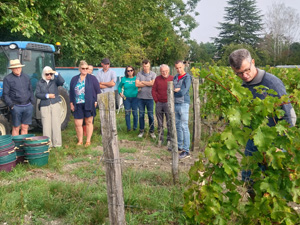
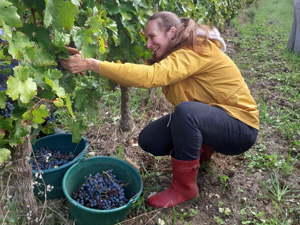
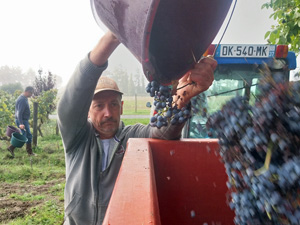
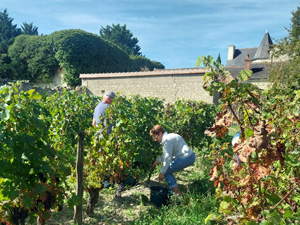
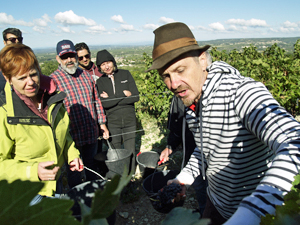
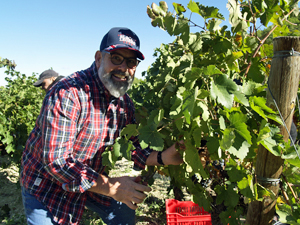
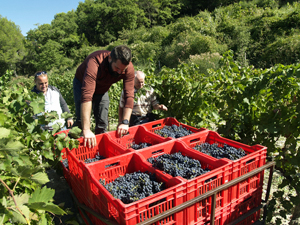
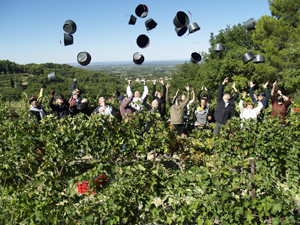
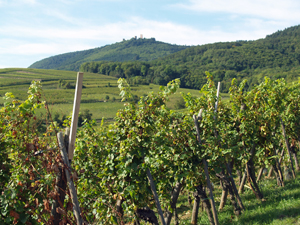
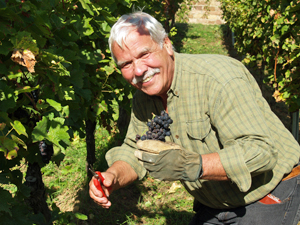
Adopt a Vine and Make Your Own Wine

with the Gourmet Odyssey Wine Experience

Visit www.gourmetodyssey.com for more information

Tagged articles : Harvest

Harvest Experience Day in Bordeaux


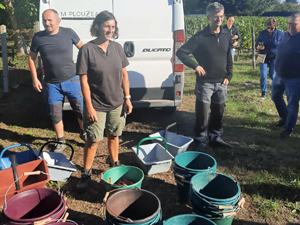
Last weekend we completed our tour for 2011 of the Harvest Experience Days for each of our partner vineyards at Château Beau Rivage in Macau-en-Médoc.  A turquoise blue sky and warm welcome were waiting for us.

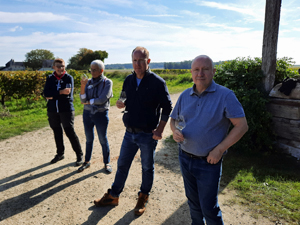
The Gourmet Odyssey Wine Experience clients gathered around a cup of coffee at the start of the morning.  For some, it was the second time they had visited the estate, having already participated in the Wine Discovery Experience Day, for others it was their very first time.  We therefore started the proceedings with an introduction by Christine Nadalié, the owner and winemaker at Château Beau Rivage.

Harvest wine course to pick the grapes in the vineyard

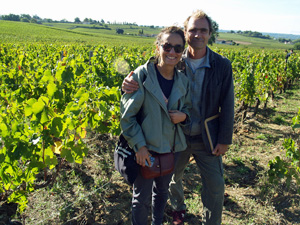
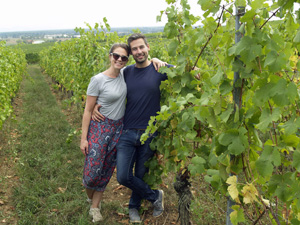
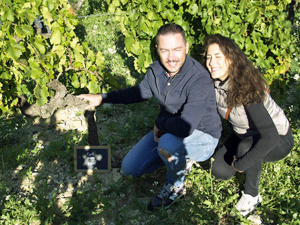
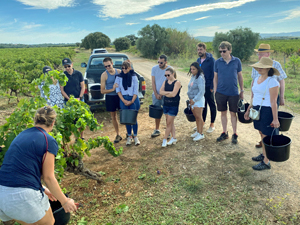
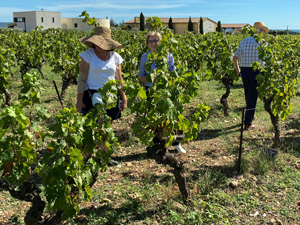
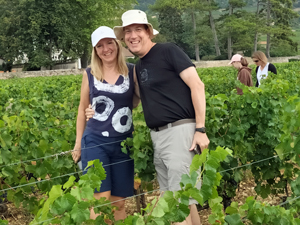
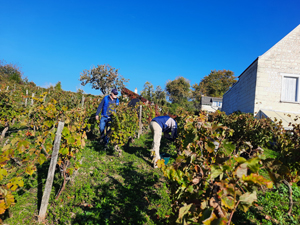
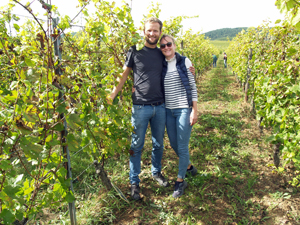
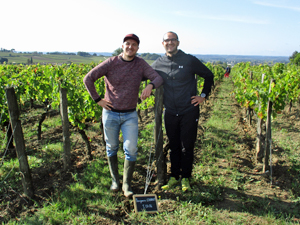
Then out into the vineyard we headed! We walked to the vineyard plot where the rows of adopt-a-vines are located.  A small sign, personalised with the name of each client, indicated the position of their vines.  There was time to take a few pictures next to the vines which had produced the precious grapes for the 2011 vintage, before getting down to some real work!
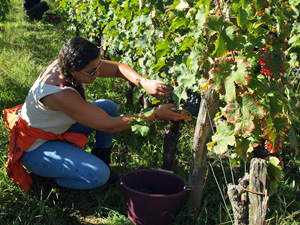
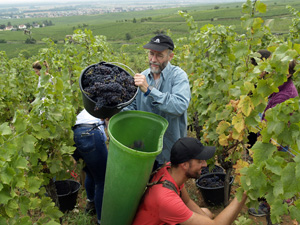
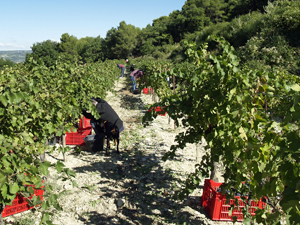
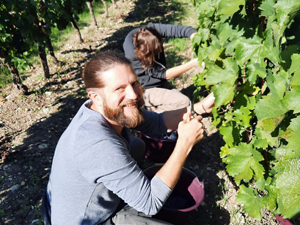
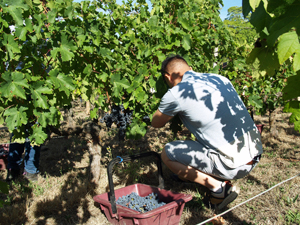
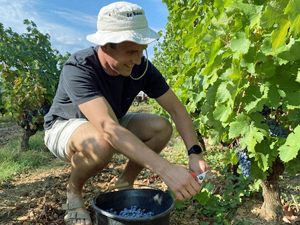
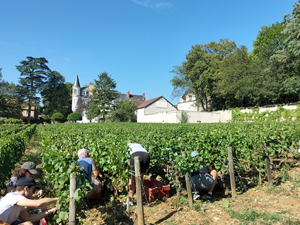
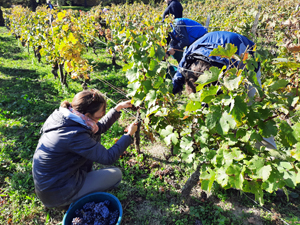
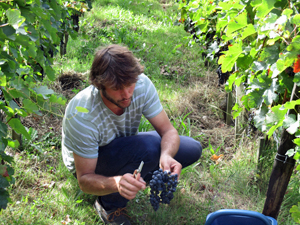
Having received our instructions from Christine, we spread out amongst the vine rows, secateurs in hand to start the harvest.  It was the last few days of this year's harvest at the domaine, and some of the grapes were showing signs of botrytis which had settled during the wet days at the start of September, so we had to do some sorting in-situ.  The healthy grapes were very ripe and oh so sweet - a real treat for our taste buds!

Pickeing the bunches of grapes during the harvest in Bordeaux

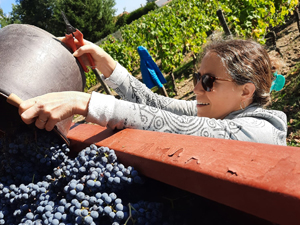
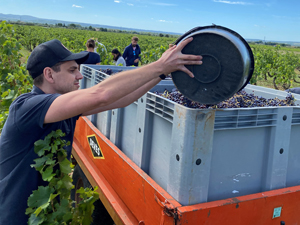
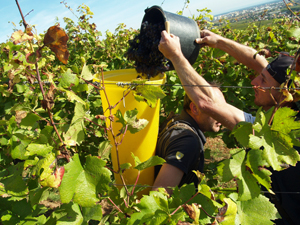
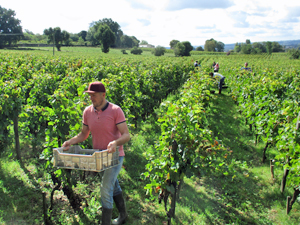
We tried two different harvesting methods on the Saturday and Sunday.  On Saturday we used a team of porters with baskets strapped to their backs.  Each time the harvesters had filled their buckets, they cried out "Porter" and emptied the grapes into the porter's basket.

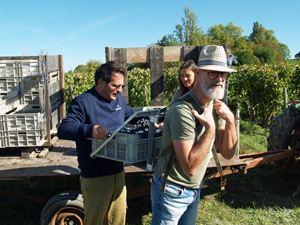
Transferring the bunches of grapes to the porter

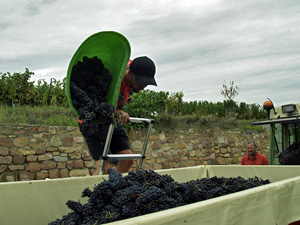
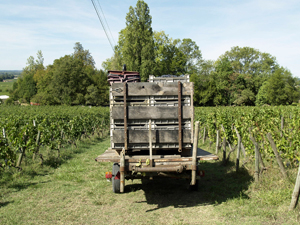
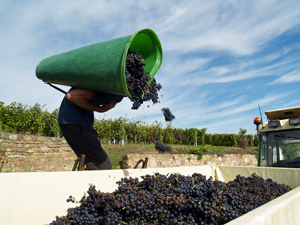
The porters then carried the grapes to the trailer, and emptied them over their heads.  With the weight of the fully laden basket and whilst balancing on a ladder, they had to keep their equilibrium!

Harvest Wine Experience Gift. Emptying the picked grapes.

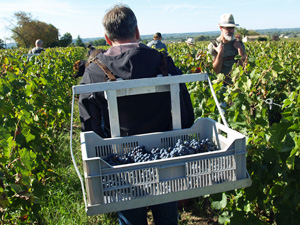
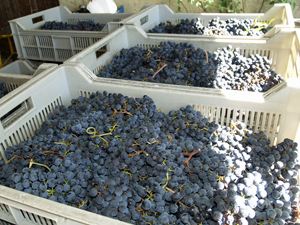
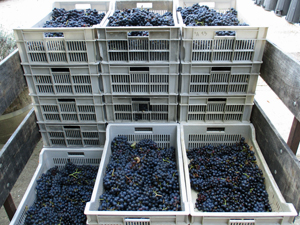
On Sunday we harvested using plastic crates instead of buckets, which is gentler on the grapes.  Instead of carrying baskets on their backs, the porters wore a frame that the crates could be loaded onto to take to the van and trailer waiting nearby.  Christine wanted to test this method because the grapes are less crushed by the weight of the other bunches.

A porter collecting crates of harvested grapes

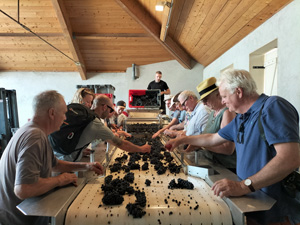
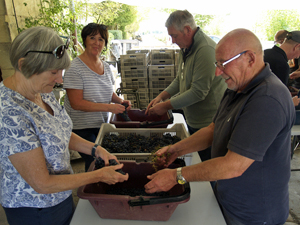
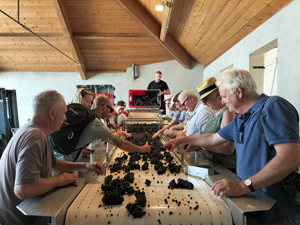
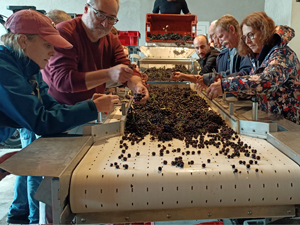
Following the grapes on their journey, we arrived at the sorting table.  Once the stems had been separated from the grapes, the berries move along the conveyor belt, giving us a final opportunity to remove any unripe or bad grapes before they enter the fermentation tank.

Sorting the grapes on the sorting table

All that activity added up to good morning's work, so the chilled rosé was most welcome!

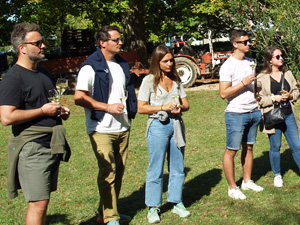
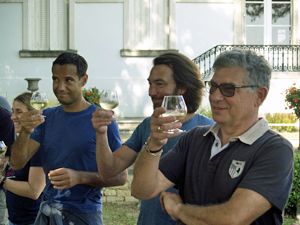
Wine Tasting. A chilled rosé in the shade of the Château

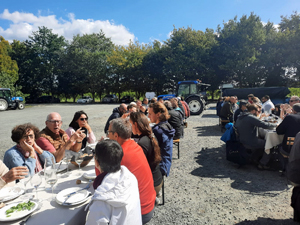
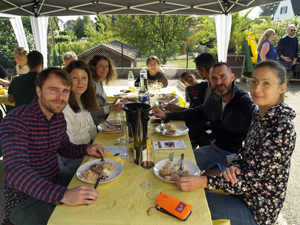
During the harvesters meal, we tasted some of the estate's other wines, starting with the "Raphaël" Bordeaux Supérieur red wine.  We then tasted the "Silvio" and the "Clementine" before the "Château Beau Rivage" 2007, which is the wine chosen for the Gourmet Odyssey clients.  We finished the wine tasting with "Le Phare", a blend of Merlot, Petit Verdot and Malbec which has been aged in 100% new oak barrels for two years, and Christine's "Clos la Bohème" Haut-Médoc red wine.

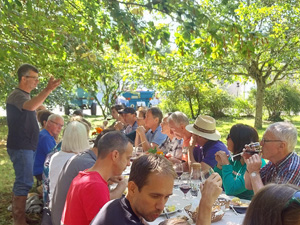
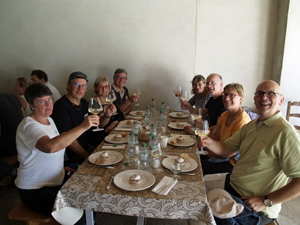
The Harvesters Meal

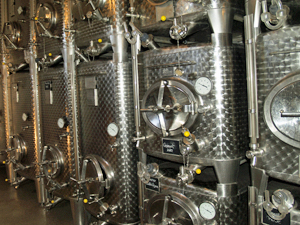
In the afternoon, we headed to the fermentation hall and the barrel room to complete the journey of our grapes!  Christine explained how the sugar from the fruit will be transformed into alcohol during the fermentation process.

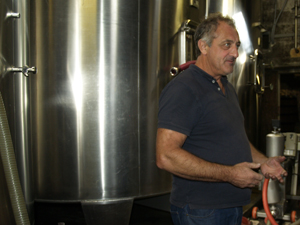
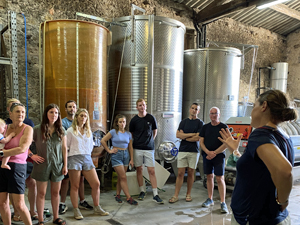
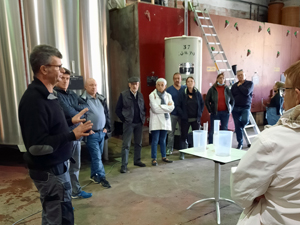
Christine explains the fermentation process

With the help of a mustimètre, Christine measured the density of the juice from the grapes that we had just harvested.  This measure allows us to know the level of sugar in the liquid and gives a good indication of the potential alcoholic volume of the resulting wine - in this case 14.5%.

Measuring the sugar level of the grape juice

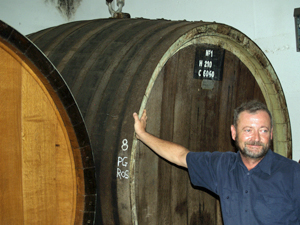
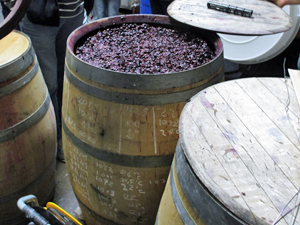
In the barrel room we saw where the 2011 wines will be aged, and where some of the 2009s and the 2010s are still resting.  With her cooper's expertise, Christine taught us about the role of oak in the making of her wines.


Visit of the cellar to see where the wine ages in oka barrels

To end the day, one last tasting of the fruit of our labour, the grape juice that we had harvested over the weekend.  The verdict, a very sweet juice!  The mustimètre hadn't been lying!

Tasting the Must, freshly harvested grape juice

All that remains is to patiently await the ageing and blending of our wine...

Add a comment

Harvest Experience Day in the Loire Valley


We spent last weekend at Château de la Bonnelière in Chinon.  Surrounded by the beautiful Loire Valley countryside and under a blue sky, we met up with some of the Gourmet Odyssey Wine Experience clients for the first Harvest Experience Day at the winery.

The aim of this wine course is to discover what it's like to be a winemaker in a very practical and fun way. It's a sharing of knowledge between the winemaker and the clients, who learn in-situ the different facets of the profession by rolling up their sleeves and actively participating in the work themselves!

Harvest Experience Gift in the Loire Valley, France

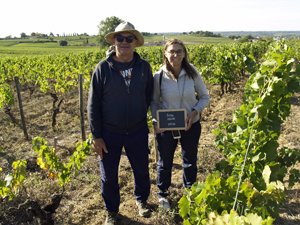
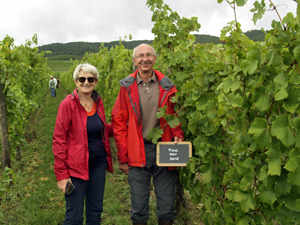
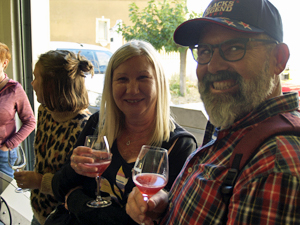
Following the introduction from Marc Plouzeau, the owner and winemaker at Château de la Bonnelière, we started the day with another introduction, that of the adopted vines!  Included in each client's Wine Experience are a number of adopt-a-vines.  At the beginning of each row of vines, a small personalised sign indicates the owner of the adopted vines, providing a photo opportunity to immortalise the moment in front of the vines, laden with ripe grapes!

Adopt-a-vine gift owner infront of her adopted vines

But we weren't there just to take photos!  Marc had brought us a van full of crates, which we then distributed among the rows.

Marc showed us how to harvest; which grapes to cut and which to leave behind. At Château de la Bonnelière, the sorting of the grapes is done in the vineyard at the time of harvesting, and not on the sorting table, as is the custom in some wineries. It's therefore very important to only harvest the ripe grapes to ensure the quality of the wine to follow!

Secateurs and baskets in hand, we spread out among the vines in teams of two to start the harvest!

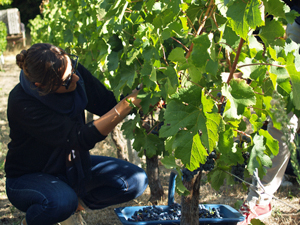
Picking the grapes during the Harvest Experience Day in the French vineyard in Chinon, the Loire Valley

The vines at Château de la Bonnelière are bursting with grapes this year and the fruit is looking very healthy despite the wet end to the summer that the region suffered. The smile on Marc's face showed that he was happy with the condition of the grapes. It's the end of another cycle in the vineyard, but many hours, much energy and devotion have been spent in the vineyard since the last harvest to get to this point. The vine is a creeper plant, and so can grow all by itself, but to ensure that the grapes contain enough sugar to make a quality wine, it demands lots of work, especially when they are cultivated organically.

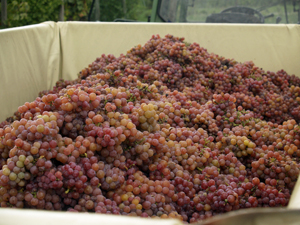
Ripe grapes ready for picking

The baskets filled up quickly! Once full, we transferred the grapes into the crates before moving onto the next vines in the row.

Emptying the harvested grapes into the crates

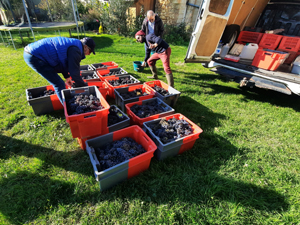
At the end of the morning, all of the crates had been filled! A tractor was waiting for us at the edge of the vineyard, and we loaded our precious harvest onto the trailer. We were surprised to learn from Marc that we our efforts represented roughly 1000 bottles! Not bad at all, especially as it was the first harvest for each of the clients!
Taking the harvested grapes by tractor to the Fermentation Hall

Following our grapes, we arrived at the chai to put our harvest into the fermentation tanks ourselves!

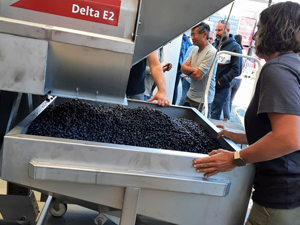
Again in teams of two we emptied the crates into the de-stemming machine, which separates the grapes from the stalks. 

Emptying the grapes into the de-stemming machine

The grapes fall into a trolley underneath the machine and the stems fall the other side into a large bucket. The stems will be used as compost and spread among the vines to return some of the nutrients to the soil.

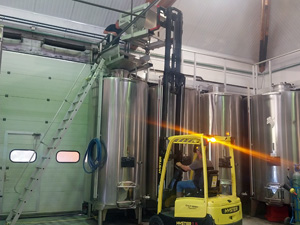
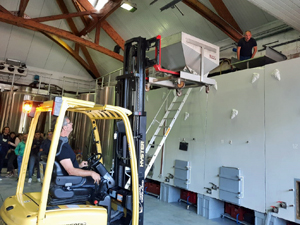
With the help of a forklift truck, the whole grape berries are then put into the top of the vats, where the fermentation will start to turn the sugar into alcohol.

Putting the grapes into the fermentation tank using a forklift truck

All of this work had made us thirsty, so back to the winery to taste some of the estate's wines around a few old wooden wine barrels.  Accompanied by some locally-made rillettes, we tasted the Touraine Sauvignon 2010 white wine, followed by a Chinon rosé 2010.

Wine tasting session of the estate's Chinon and Touraine red, whit and rosé wines

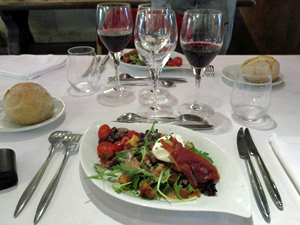
We then sat down in the shade to savour the delicious meal, prepared by Madame Plouzeau, Marc's mother. The tomato salad will be remembered for a very long time to come ! The tomatoes were picked just a few hundred metres away, and were truly bursting with flavor!  She had also prepared a Blanquette de Veau, a selection of local Loire cheeses and an apple and rhubarb crumble. And of course we had some wine to accompany these delicacies; a Chinon "Rive Gauche" 2009, a Chinon "Château de la Bonnelière" 2009, and the 2009 and 2008 vintages of the Chinon "Chapelle".

The Harvesters meal

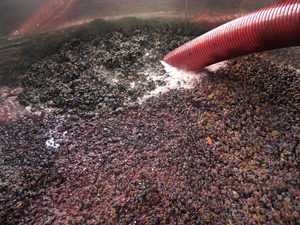
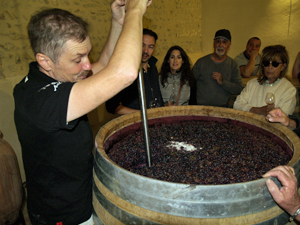
After the meal, there was still some work to be done, so we headed back to the chai.  In the fermentation tanks, the grape skins rise to the top to form a cap above the liquid. It's the skin however that gives the colour and much of the wine's structure through the tanins that it contains. It's therefore vital to mix the liquid and the skins. There are various ways to do this. You can push the skin down into the liquid using the "pigeage" technique, or you can do the opposite by taking the liquid from the bottom of the vat and putting it back in the top so that the juice extracts the colour and tannins from the skin as it passes through the cap. This is method is called "remontage".

During the first stages of fermentation, Marc prefers remontage. To do so, we put a big bucket in front of the vat, and opened a tap to let the juice flow into it. We then put in place the tubes and pump to carry the liquid into the top of the vat.

Remontage to extract the full potential for the wine

We couldn't leave without tasting the fruit of our labour, so we ended the day by tasting a cabernet franc that had been harvested a few days before and so the fermentation had already started. This lightly fermented grape juice is called "Bernache" in the region. We then compared it to a cabernet franc rosé where the fermentation was already more advanced.

Tasting the Bernache, grape juice that is in the early stages of fermentation

Sincere thanks to all those who came and particularly to Marc for having showed us behind the scenes during the busy harvest period.  We can't wait until the next Wine Experience Day!

Add a comment

Harvest in Chablis


Another weekend, another region and a new Harvest Experience Day!  This time we were at Domaine Jean-Marc Brocard in Chablis with some of our Gourmet Odyssey Wine Experience clients to harvest the Chardonnay grapes!

Harvest Experience in Chablis, Burgundy, France at Domaine Jean-Marc Brocard

As soon as the clients had all safely arrived, we headed straight into the vineyard to receive our orders from Frédéric Guegen, the Vineyard Director.  He split us into two teams of harvesters and porters.

Armed with a pair of secateurs and a bucket, the harvesters paired up to pick the grapes from both sides of the vine rows.  Paying particular attention to their fingers, the harvest began!

Harvest the bunches of Chardonnay grapes in the vineyard at Domaine Jean-Marc Brocard

The grapes at the winery hold much promise this year.  They have a good balance between sugar and acidity, and have grown in abundance!  At the end of the harvest, the yield should be about 25% more than last year.  The buckets were therefore filling up quickly, and it didn't take long for the first cries of "Porter" to resonate!

Chardonnay grapes ready for picking

Each member of the porter team found themselves with a big basket strapped to their back, their mission being to carry the bunches of grapes to the trailer located at the edge of the vineyard.  As soon as the bucket is full, the harvesters call for to the porters to come, and then empty the fruit into the porter's basket.  It's a physical job, especially as a full basket can weigh up to 60kg.  You often think that the basket is full long before it actually is! With the rolling landscape of Chablis, you also have the slopes to deal with!

Emptying the harvested grapes into the porter's basket

Emptying the baskets is not as easy as it looks either, especially the first time.  You have to climb a ladder and then let the grapes fall over your head.  Some porters almost followed the grapes in!

Emptying the harvested grapes into the trailer without falling in

Working together, it's impressive how quickly the vines are stripped of their fruit.  It gave us more than enough to work with afterwards though!

Grape Harvester in full action

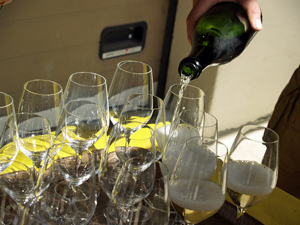
Back at the winery, the moment for the wine tasting came.  First up, a Petit Chablis 2010, followed by a Chablis "Domaine Sainte Claire" 2009 which we then compared to a Chablis "Vielles Vignes de Sainte Claire" 2009.  We continued the tasting with the wine from the adopted vines of Gourmet Odyssey clients,   "La Boissonneuse" 2009, before savouring a few of the Chablis Premier Crus; a "Vau de Vey" 2009, a "Montée de Tonnerre" 2009 and a "Vaulorent" 2008.

Tasting the Chablis wines

Overlooking the vines, we tucked into the Harvesters Meal!  The tasting continued with a few of the estate's Irancy red wines and a few of the older Chablis vintages, served in magnums, such as the Chablis "Vielles Vignes de Sainte Claire" 2001.

Savouring local Chablis delicacies during the harvesters lunch

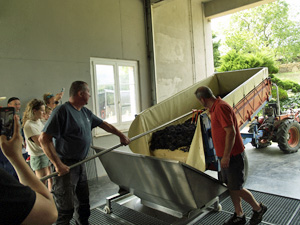
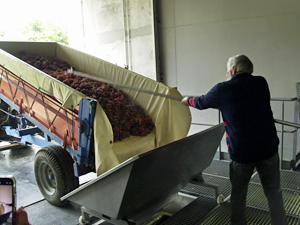
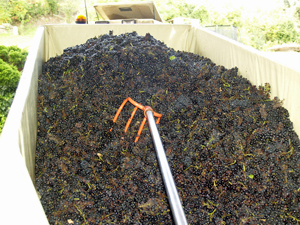
Each day was a little different.  On Saturday, the winery was in full action because the team of professional harvesters was also working.  This meant that the mechanic presses were up and running.  We rejoined our grapes that we had lovingly harvested at the fermentation hall, to see them emptied from the trailer into the press below.  The press then buzzed into life as it extracted and separated the juice from the skin, pips and stalks.

Pressing the chardonnay grapes for white wine
 

Continuing the journey of our harvest, we ended up in front of the tank where the fermentation will begin.  Glass in hand, we tasted the fruit of our labour, an oh so sweet grape juice!  We then had the chance to compare it to the juice from another vat, where the alcoholic fermentation had already begun for several days.

Tasting the freshly pressed grape juice and bourru direct from the fermentation tank

The estate's harvesters had been working in a pinot noir plot of vines, located in the nearby Côte d"Auxerre.  How the grapes are treated and put into the fermentation tanks differs from the chardonnay, so we were able to contrast the methods used for red and white wines.  Our first observation was the use of a sorting table.  We each took up position either side of the table to sort the good from blemished or unripe grapes.   Then we watched as the grapes are stripped from their stalks and then put into the tanks without any pressing.

Sorting the Pinot Noir graoes on the sorting table

Sunday being a day of rest for the harvesters, the electric presses weren't operating.  That gave us the opportunity to discover how the grapes were pressed in days gone by!  The estate still has a few old wooden pressing machines, and one of the longer-serving members of staff, Jean-Bernard, helped us get one of the legendary presses up and running!

Traditional wooden wine press in action

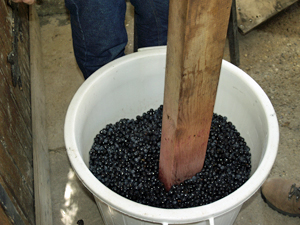
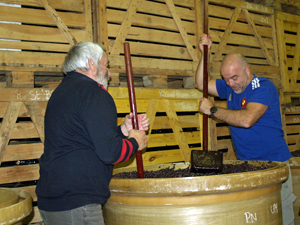
Once filled, we put in place the wooden planks and the gearing that would press the grapes.  To work the press, we had to move a long iron handle to and fro.  Easy at first, but it became more and more resistant as time wore on! You have to be patient because if you go too quickly, the juice doesn't have time to flow out.

Working the wine press

Even if it takes much longer, the grape juice, tasted directly from the press, was still as sweet and delicious as the day before!

Tasting the grape juice direct from the press

Many thanks to Céline, Frédéric and the team at Domaine Jean-Marc Brocard for having welcomed us so warmly.  We're longing to taste the finished 2011 vintage!

Add a comment

Harvest Experience Day in the Languedoc


We have just spent our first Wine Experience day at Domaine Allegria, and we are thrilled with our choice of winery and the winemakers, Ghislain and Delphine d'Aboville.  A fantastic setting and a passionate couple who have an unconventional and captivating story on how they ended up settling under the Languedoc sun of southern France.

We met up with some of the clients of the Gourmet Odyssey Wine Experience for the harvest, and what fine grapes were waiting for us!

Harvest Experience Day at Allegria, Pezenas, Languedoc-Roussillon, south of France

In front of the brand new winery building, Ghislain introduced us the estate and briefly described his professional journey, from his beginnings in the Champagne region, his studies of wine in Montpellier, the experiences he gained whilst working in wineries in France, Argentina and Italy, up until his quest to find the perfect land, capable of providing the quality of grapes to make the wines that he had so long dreamed of making.

In the vineyard at domaine Allegria

Rounding the winery building, we headed up into the vines, where Ghislain pointed out the difference in grape varieties and terroir.  We crossed to the far side of the vineyard to reach the plot where the adopted vines of Gourmet Odyssey's clients are located.  A personalised sign for each client was awaiting them to identify their row of vines!

Harvest of the grapes among the vines

But, as the name of the Harvest Experience day suggests, we were there to harvest!  Armed with a pair of secateurs each and a crate, we dispersed amongst the vine rows in teams of two to get to work harvesting.  A few grapes found their way into our mouths rather than the crates, giving the first hint of the vintage to come!

Van filled with crates

The van was quickly filled with the bulging crates, so Ghislain took the first part of the harvest back to the winery and brought us back some new empty crates.  We obviously had a crack team of harvesters with us!

Wine tasting at Allegria, Pezenas, Languedoc-Roussillon, southern France

Back at the winery, the aperitif was most welcome!  We started the wine tasting of Allegria's nectar with the "Petits Bonheurs" 2010 rosé, followed by the "Tribu d'A" 2008 white. 

Tasting the red and white wines, Coteaux du Languedoc Pezenas

We continued the tasting over lunch with some red wines: the "Tribu d'A" 2008 red, a blend of 80% syrah and 20% mourvèdre and the wine chosen for the Gourmet Odyssey vintages, the "Cousu Main" 2008, served in magnums, finishing with the "Carignan Gourmand" 2008.

Unloading the crates full of the harvested grapes

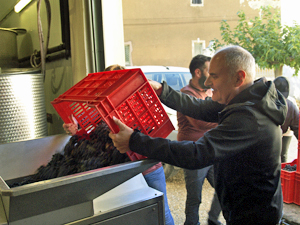
After the meal, it was time to get back to work! The first task was to empty the remainder of the harvested grapes from the van.

Before starting to put the grapes into the fermentation tanks, we had to rinse the material, and then we each took our places in a different work post.

Emptying the grapes into the egrappeur

The first team took the full crates and emptied them into the "égrappeur", a machine that separates the berries from the stalks.

Harvested Grapes falling into the fermentation vat

The grapes fall into a basin, from where they are pushed into the vat with the help of an electric pump.  Another team, positioned above the tanks controlled the grapes as they arrived.  Each grape variety and plot of vines is vinified separately in different vats.

Speading the grape stems amongst row of vines to compost and return nutrients to the soil

The stalks are collected in crates underneath the de-stemming machine and are then taken away and spread among the vines to decompose and return nutrients to the soil.  The vines at Allegria are cultivated organically, so no synthetic fertilizers are allowed.

It's very impressive to have the opportunity to be able to go behind the scenes to see the grapes being put to rest in the vats, and we were surprised with the speed with which we got through all of the bunches of grapes that had took us so long to harvest in the morning!

Cleaning the equipment at the end of the Harvest Experience Day

At the end of the day, all that remained was to clean the crates, secateurs and the rest of the material used so that all was ready the following day.

A very instructive and fun day to gain a small insight into the life of a winemaker.  Many thanks to all who came, and to Ghislain and Delphine for their warm welcome.  We left Pézenas with the feeling that the Allegria odyssey is only just beginning!

Add a comment

Harvest 2011 at Domaine Chapelle in Burgundy


At last, the long awaited moment has arrived to start the harvest!  The villages and vineyards are a hive of activity.  Teams of harvesters are dotted amongst the vines from the crack of dawn, and the roads are filled with the tractors that go back and forth between the vineyards and the wineries, carrying their precious load.

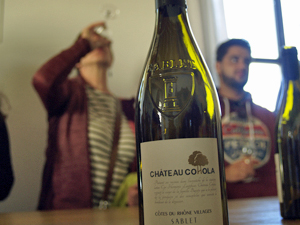
We started the Harvest Experience Days for the 2011 vintage last weekend at Domaine Chapelle in the Côte de Beaune village of Santenay.

Harvest Experience Day at Domaine Chapelle in Burgundy France

As with the other French wine growing regions, the grapes have ripened early this year.  At Domaine Chapelle the first bunches were harvested some three weeks earlier than last year!

After the quick introductions, it was straight of the Clos des Cornières vineyard, home to the adopted vines of the Gourmet Odyssey Wine Experience clients.  Jean François Chapelle lost no time in distributing our tools for the day, a pair of secateurs each, and a pile of crates to put the grapes into!

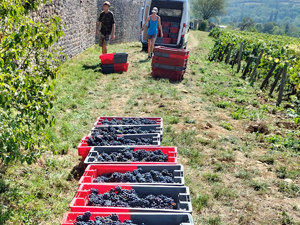
Containers at the start of each vine row to collect the harvested grapes

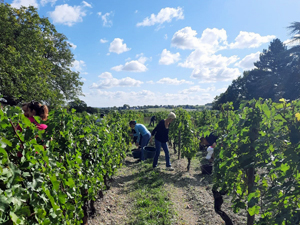
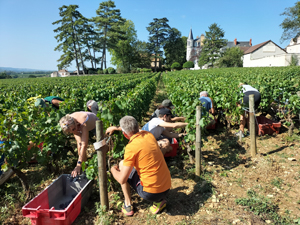
In teams of two, we spread out to take charge of a row of vines per couple, and the harvest began!  After removing some of the leaves from around the bunches, so as to better see the grapes, we used the secateurs to cut them and then we placed them in the crate.

Harvesting the Grapes from the adopt-a-vines

In such a setting it's impossible to resist the temptation of tasting the grapes!  They are looking good this year, fairly large and oh so sweet!  We noticed a few damaged bunches, either some grapes that had shriveled up from the hot sun at the end of June, and some bunches where the first signs of rot have appeared, caused by the hot and wet weather that settled over Burgundy in the couple of weeks prior to the harvest starting.

Assessing the quality of the grapes

Once we had filled each crate, we brought it back to the beginning of the vine row to be picked up later, and then took a new crate to harvest some more grapes.

Filling the crates with the harvested grapes

Harvesting is a fairly physical job, especially in Burgundy where the vines are pruned close to the ground.  The aperitif was therefore very welcome!

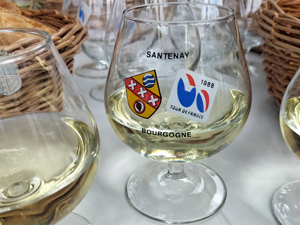
Back at the winery, we started the wine tasting session with a Santenay "St Jean" 2009 white wine, followed by a Chassagne Montrachet Premier Cru "Morgeot" 2009.  As is the custom, the wines were accompanied by some gougères, a local specialty!

Wine tasting Burgundy wines from Domaine Chapelle

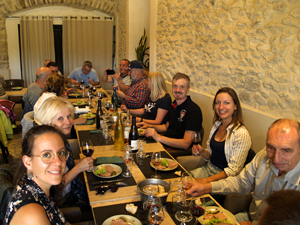
During the meal, we continued the tasting with some of the winery's red wines; a Santenay "Clos des Cornières" 2007, followed by an Aloxe Corton 2007 to compare two pinot noir wines of the same vintage but from different terroirs.  We ended with a Santenay Premier Cru "Beaurepaire" 2002.

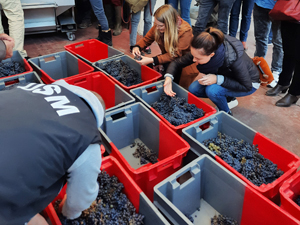
After lunch, we met back up with our harvested grapes, which had since continued their journey to the reception hall.  Here the crates, brimming with grapes, are received and emptied onto the sorting table.  Side by side with the professional team, and once again equipped with a pair of secateurs, we separated the damaged or unripe grapes from the ones which are to be used to make our wine.

Sorting the good from bad grapes on the sorting table

We saw the de-stemming machine at work which separates the grape berries from the stalks.  The stalks and rejected grapes are collected in a trailer to make compost.

The discarded stems headed for compost

The sorting table is located above the fermentation hall, and so the good grapes continue their journey down a slide where they are collected in a trolley before being taken to one of the fermentation tanks.  Each plot of vines is vinified separately.  Yannick Jacrot, the Technical Director, and Jean François Chapelle then explained the first stages of fermentation to us.

Filling the fermation tanks with the harvested grapes

We then headed down the stone steps into the cellar to see where the wines will continue their fermentation and ageing in oak barrels.

Visiting the wine cellar

All this made us thirsty again, so we had a final refreshment waiting for us; some grape juice from that day's harvest!

A big thank you to all those who shared the day with us, and especially to Jean François and his team for welcoming us so warmly during the busiest period of the winemaker's year!

Add a comment

Successful Harvest Experience Day in Bordeaux!


Last weekend we were at Château Beau Rivage, in the Bordeaux region, to get involved in the harvest with some of the Gourmet Odyssey Wine Experience clients.  We had a great time, mixing work in the vineyard, getting to know the winemakers and sharing their knowledge, and of course tasting some great wines!


Harvest Experience Day at Château Beau Rivage in Bordeaux


After a brief introduction to the winery, Christine (the owner and winemaker) and her team, we headed off to the vineyard, each carrying a basket and pair of secateurs.  Christophe explained the differences between the five grape varieties grown in the vineyard, the work involved in bringing the grapes to maturity, and what to look out for to know when the grapes have reached the ideal moment for harvesting.

Adopt-a-vine sign
 

Before starting to harvest, we made our way to the part of the vineyard where the Gourmet Odyssey vines are located, so that each client could find their adopted vines.  To help identify the vines, Château Beau Rivage had engraved wooden signs, specially for the clients of the Harvest Experience Day, at the barrel-making firm that belongs to Christine's family.

Harvester
 

Christine threw out a challenge to us to fill a trailer! In pairs, each on opposite sides of a row, we began to harvest the Merlot plot that was at the peak of its maturity.  A few songs and the regular cry of "Porter" added to the snip snip of the secateurs and the rustle of leaves.  Once the baskets were filled, the harvester called for the porter, and empties the picked grapes into the basket that the porter carries on his back.  Having collected the bunches from the different teams of harvesters, the porter then empties his basket into the trailer, which starts to fill little by little.


Transferring the grapes to the trailer

The work of the harvester and porter is very physical, especially if done day after day for a couple of weeks.  Luckily, our mission was finished in a little over two hours, and a wine tasting session and harvester's meal awaited us back at the château!

Barbecue over dried vines
 

The first wine we tasted was the Château Beau Rivage Clairet 2009, a fresh Bordeaux style rosé, served with local charcuterie.  Accompanying the duck and gizzards salad, we tasted the Château Beau Rivage 2005 and 2003 vintages, and the Clementine 2004.  During this time, Christophe started the barbecue by lighting the dried vine branches that would cook our delicious steak bordelaise, served with a gratin dauphinois and a carafed Clos la Bohème 2007, and the Phare 2002. Once the cheese and home-made chocolate cake were also finished, it was time to get back to work!

The grapes climb into the destemmer
 

The tractor reversed the trailer full of harvested grapes to the reception area.  The grapes climb up a mechanized ladder from the trailer to the de-stemming machine, where the grape berries are separated from the stalks.  We all gathered round the sorting table to remove any bad grapes or stems that managed to get through the machine.  There were very few rotten grapes this year, which helped us with the sorting!

Remontage to mix the grape juice with the skin

Once the sorting was finished, we entered the winery to learn more about the first stages of fermentation which turns the grape sugar into alcohol.  We watched a "remontage" happen, where the must (grape juice) is drawn from the bottom of the vats and pumped back into the top to mix with the grape skins that remain at the top.  This process is very important to ensure that the tannins and colour from the grape skins are best extracted to help improve the quality of the wine.  We tasted the sweet tasting must directly from the vat, to better understand firsthand about fermentation.

Tasting the Grape Must in the cellar
 

After a quick tour of the cellar to see the barrels that are currently holding the 2009 vintage, and some cleaning of the tools used during the day, the time had come to say our farewells.  A huge thank you to all the clients, and to the staff at Château Beau Rivage for having brought such energy and good cheer to this harvest experience day.

Add a comment

Harvest Experience at Domaine Chapelle in Burgundy


Last weekend, we had the pleasure of welcoming the Harvest Experience Day 2010 clients at Domaine Chapelle, with a few drops of rain, but in good cheer! Everyone was looking forward to harvesting their grapes, now finally ripe for making the 2010 vintage.

Grapes ready for harvest

A few morning rain showers meant that we changed the order of the day a little.  After the introduction to the region and the wine estate by Jean François Chapelle, we headed off to the reception hall where the grapes, freshly harvested by the team of 40 harvesters, are received to be inspected by the expert eyes of the sorting table team.

Harvested grapes arrive in the reception hall

Yannick, the Vine Manager and, during harvest time, manager of the sorting team, explained and showed us how to separate the good grapes from the bad, thus ensuring that only the best continue their journey into the fermentation tanks.  Around the sorting table, the atmosphere is very jovial, and the jokes fly around.

Sorting the good from bad grapes

Once sorted, the good grapes enter the destemming machine to separate the grapes from their stems.  The stems are then collected together with the rejected grapes, part of which will be turned into compost to nourish the vines for the next harvest, and the rest used to make the strong liqueur, Marc de Bourgogne.

Collecting the stems for compost

Domaine Chapelle boasts a new reception hall which was completed just in time for last year's harvest.  It was engineered to make the handling of the grapes as gentle as possible to help further improve the quality of the wine. And so instead of the grapes being pumped, as is the case in many wineries, they slide by the force of gravity into the awaiting trolley below.

The trolley is then wheeled by hand to one of the vats where each vineyard plot is fermented individually.  The grapes and their juice enter the vats to ferment, which can last between 10 and 25 days depending on the year.

The grapes enter the fermentation tanks

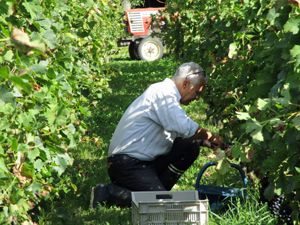
By this stage, the rain had now stopped, and so arrived the moment that everyone was waiting for!  Down to the vineyard, booted up and armed with secateurs to harvest the grapes.  Each client introduced themselves to their adopted vines, identifiable by a sign with their name on, and after a quick lesson by Jean François on which grapes to pick, it was time to knuckle down to work!  And we can testify that the harvest was a good one!

Gourmet Odyssey harvesters hard at work

After the effort, the just rewards! Back to the winery for the wine tasting, accompanied with gougères, a local Burgundy specialty.  We started with Domaine Chapelle's Meursault 2008, followed by the 2003 and 2005 vintages of their Santenay "Clos des Cornières", the wine chosen for the Gourmet Odyssey Wine Experience.  Jean François explained the difference between the two vintages, which is very pronounced due to the heat wave of 2003.  We then finished with the Gevrey Chambertin 2007 and the Santenay Premier Cru "Beaurepaire" 2002. 

Wine Tasting

Next, off to the make-shift harvesters' refectory, to savour one of Yvette Chapelle's legendary harvesters' meals.  Yannick had spoken of them in hallowed terms during the last Wine Discovery Experience Day, and we weren't let down! Parsley ham, followed by beef, stewed in an Aloxe Corton (one of the estate's wines) sauce, regional cheeses, and a delicious apple tart, all accompanied with a Santenay Premier Cru "La Comme" 2002.  Difficult to get moving again after such a feast!

The Harvesters meal

We finished the day with a guided cellar tour.  Yannick explained the important ageing and blending side of winemaking, and the impact that the choice of wine barrels has on the wine.

Wine Cellar Tour

To sum up: A very pleasant day, full of encounters, sharing and conviviality.  We hope that everyone left with a small insight into the life of a winemaker during the busy harvest season, and that the next drop of Domaine Chapelle's wine will be that much more appreciated!
Add a comment

Grapes Don’t Just Grow on Vines!

The starting point for any good wine is in the quality of the grapes, but unfortunately they don't just appear by magic!

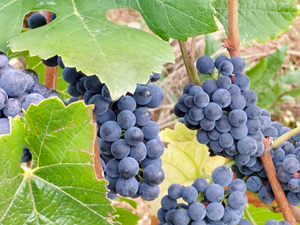
Bunch of Grapes 

Assuring the best possible harvest means many hours of labour in the vineyards throughout the year.  There are differences in the tasks carried out and in their timing according to the region, the grape varieties, and climatic differences year to year, but this blog post aims to explain the main steps in cultivating vines.


November: Preparation of the Vines for Winter

Before the cold snaps of winter set in, the vines are prepared to protect them from hard frosts, particularly the more northerly vineyards or ones that are more exposed. Often the vineyard staff will build up the level of soil around each vine stock to increase insulation in a process known as "buttage".

During this period, vines that are too old or are in bad health will be uprooted to free up space for new vines to be planted in spring.


December to March: Pruning and Training the Vines

Pruning the vines 

The main task is the pruning of the vines.  Left on their own accord, vines are very rampant, so need to be kept strongly in check.  The principal aim of pruning is to reduce the number of shoots to leave just those that will eventually bear fruit for the year's harvest. This practice enables each vine to concentrate its efforts, which will in turn improve the quality and the sugar levels in the grapes at a later stage. It's a long and laborious process, as the vineyard workers snip away with their secateurs vine by vine.  The cut shoots are often then scattered and crushed in between the rows of vines to return natural organic nutrients to the soil.

Posts and training wires are repaired, and the remaining shoots are attached to their support manually to help control the form of the fruit-bearing branches.  "Pliage" is the action of folding the branches to give the desired shape to the cine, and "accolage" is the term given to the act of attaching the shoots to the wires.

At the end of winter, once pruning has finished and as soon as the soil allows, the "débuttage" begins to return the heaped soil from around each vine stock to the middle of the rows.  This soil is then spread, "décavaillonnage", and the soil tilled to aerate it, remove unwanted weeds naturally, and to help with drainage of water.


April to May: Debudding

Budding 

In April the vines begin to grow rapidly, and the dark, bleak countryside of the winter begins its transformation to green with the arrival of new life.

The vineyard manager then starts to debud the vines, selecting to keep only the buds that will produce the grapes come harvest time.  Unwanted shoots are also pruned in a process called épamprage, again to limit the number of grapes produced.  It is very important to control the yield, so that each vine can channel its energy into a smaller amount of fruit, but with an improved quality. 

The first treatment of the vines is carried out as a preventative measure against disease.  It's also a favourable time of year to plant new vines.

The weeks between the bursting of the buds and the definitive end of the risk of frost are very worrying for the vine manager, because a cold snap can burn the buds and severely impact the harvest.


May to June : Flowering

Flowering 

This is the period when the first flowers on the vines appear and reproduction happens. If it's too humid or cold during the flowering period, the rate of growth slows which can reduce the number and size of the grapes.  After flowering, the first small green grapes are formed. The vine managers closely monitor the vines, and select the necessary treatments to ward off unwanted diseases such as mildew, black rot vines reproduce. 


July to August: Leaf Removal and Green Harvest

Ripening Grapes 

As the weather gets warmer, so the bunches of grapes mature and become bigger.  The principal task of the winemaker at this time is to ensure the optimal mix of quality and quantity of grapes.  Too many grapes and the sugar levels will not be high enough to produce a good wine, but by reducing the number of grapes, so the number of bottles that the winemaker can produce and sell also decreases. 

The wine maker first removes some of the leaves from each vine during "effeuillage", so that each bunch of grapes receives the maximum amount of sun to fully ripen, and also to better aerate the grapes, which helps protect against mildew in rainy periods.

Once the grapes have started to grow, the winemaker may choose to conduct a green harvest by removing unwanted bunches of grapes in a process called "éclaircissage".  This helps to improve the quality of the remaining grapes by raising the sugar levels.


September TO October : Harvest

Harvest Vines 

This is the most stressful time of the year for the winemakers.  They spend much time walking amongst the vines, inspecting and tasting the grapes to choose the best possible moment to start the harvest.  The key influencing factors are the level of tannins, sugar and acidity, combined with weather forecasts.  The variety of grape, as well as their physical position in different vineyards will determine the order of harvesting of the vineyard plots.

As important as the choice of when to harvest the grapes, is the management of the team of harvesters and the preparation in the winery to receive the harvest.  The harvester need to be trained, supervised, and often lodged and fed, whilst the vats must be sterilised before the fruit is added.  

The annual cycle of cultivating the vines ends with the spreading of the "marc" (skin, seeds, and stalks) amongst the vines to return natural nutrients to the soil.

And then the leaves turn a sea of red, yellow and orange before falling from the vines, as a new cycle begins!


Add a comment

Share |
RSS

About the blog

What to get the person that has everything ?

Adopt a Vine in France and Let Them Follow the Making of Their Own Wine !

From € 149

Tags

Adopt-a-Vine Biodynamic Blending Bordeaux Burgundy Cellar Chablis Course Experience Fermentation Gift Harvest Oenology Organic Tasting Vines Vineyard Vinification Wine Winemaking

All Tags

Categories

Archive

Last Comments

Links